The world orbits the duck pond near my home. At the moment, coot couples are feathering their nests, while visiting herons are picking off frogs returning to spawn.
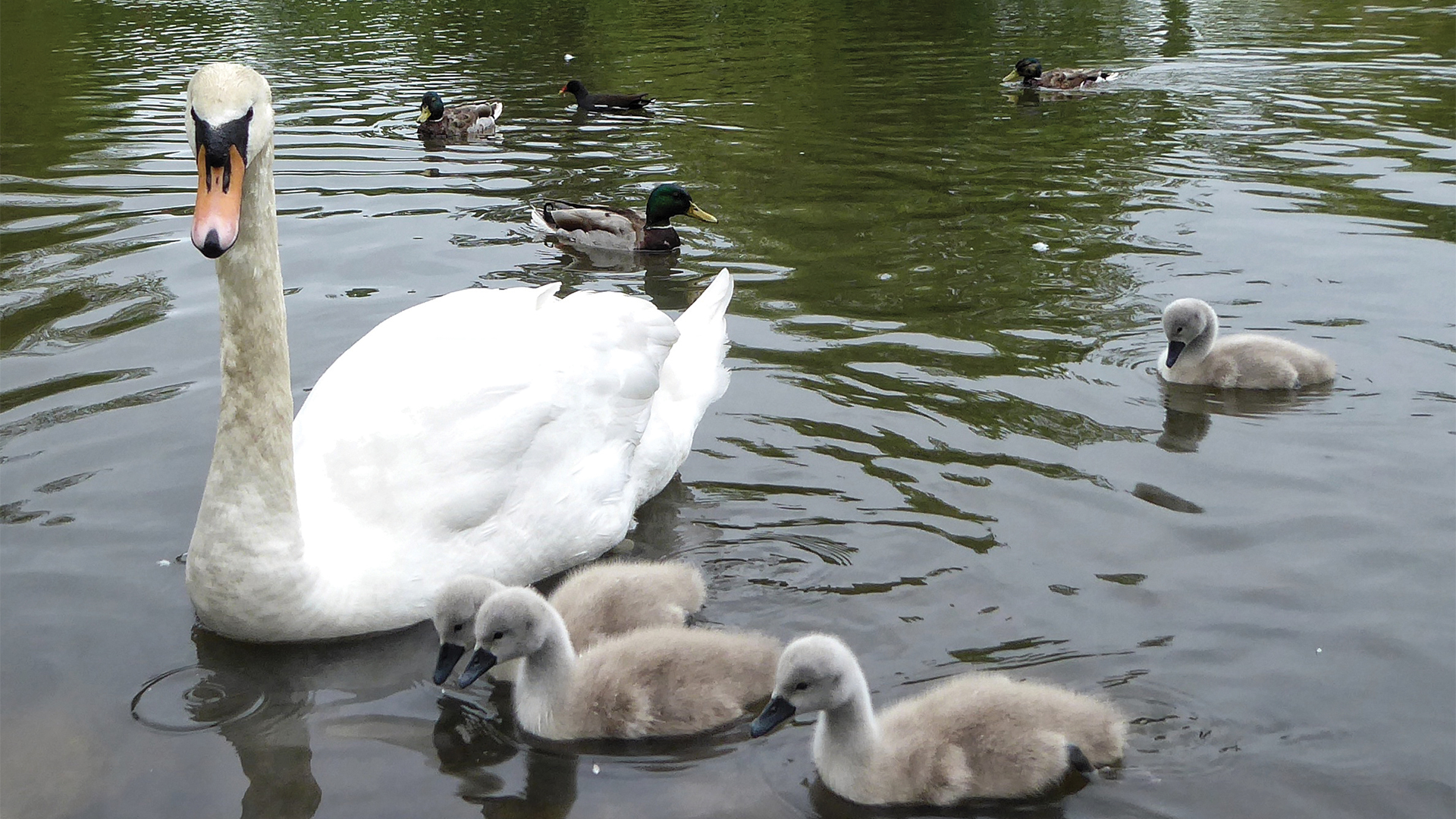
But it’s the swans that are the constant spectacle. During the pandemic there was a breeding pair, and the female, sitting resolutely on her eggs night and day (at least whenever we passed on our ‘one form of exercise’ daily strolls) felt like a show of solidarity with the rest of us living in lockdown. We were socially distanced but closer to nature. The first sight of chicks (pictured above) was a rare highlight in the long letdown of 2020.
Get the latest news and insight into how the Big Issue magazine is made by signing up for the Inside Big Issue newsletter
There had been a couple of swanless seasons since – bird flu seeing to that – and the pond felt barren without their majesty. They chose to return at the end of last summer, at the same time as my wife and I returned from a longer than planned, difficult, stay in hospital bringing our own little hatchling home.
Now I push a pram around the pond most days and a new layer is revealed with each loop. The latest swan count is eight: mostly juveniles with rust-fringed feathers, a dominant couple constantly reminding them of the literal pecking order. Besides the typical waterfowl, a cormorant has been visiting, diving into the murk for sticklebacks.
There’s life around the edges too. Lots of children, of course, come to feed the ducks but they’re outnumbered by the number of grown-ups doing the same, often by themselves, faces giddy with panicky joy if a hungry beak nips too close. Like me, they feel how the natural world can reflect and help make sense of their inner world.