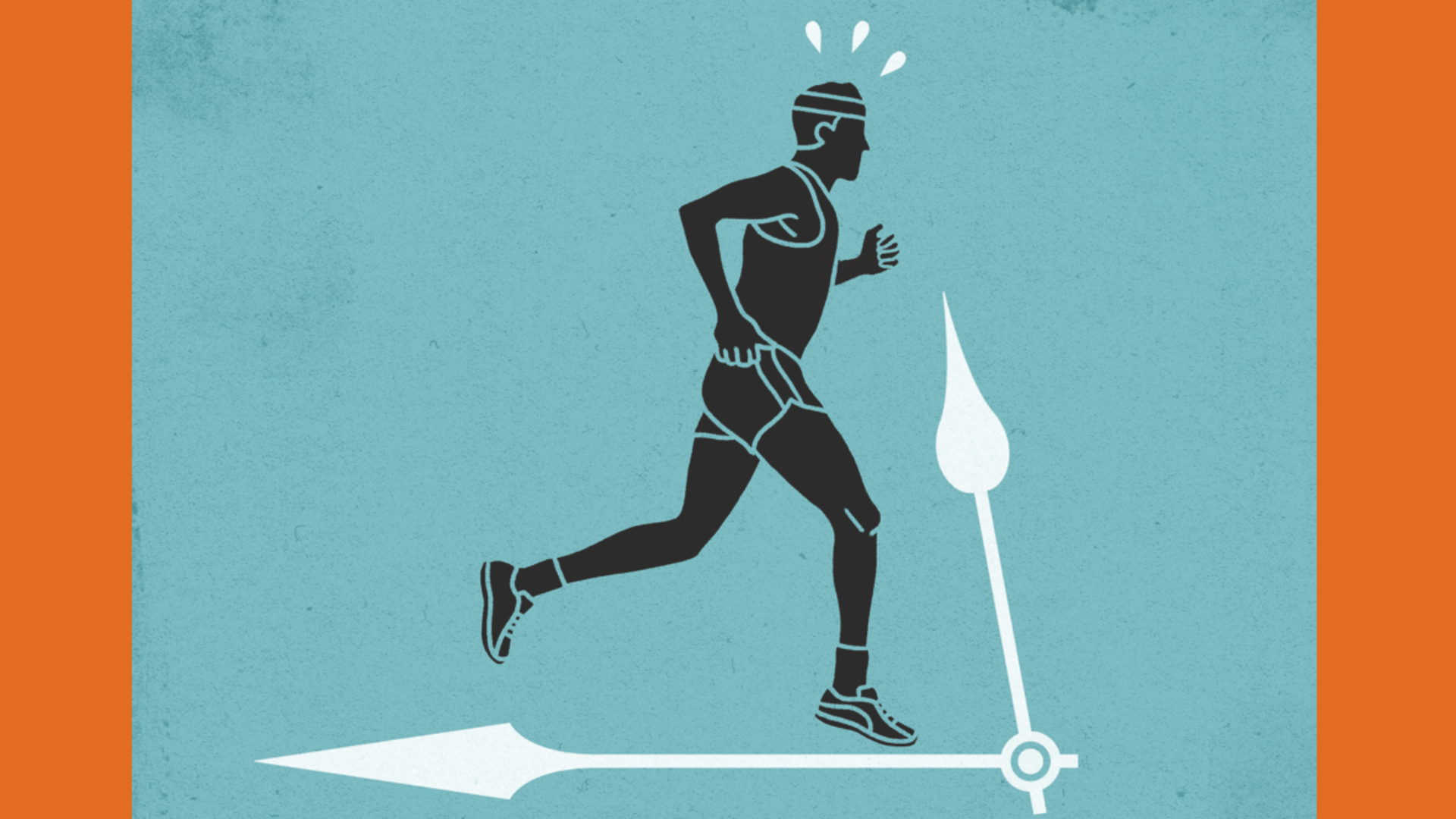
Time never stands still. Unfortunately it often speeds up when you wish it would slow, and vice versa. As Albert Einstein put it: “An hour with a pretty girl on a park bench passes like a minute but a minute sitting on a hot stove seems like an hour. That’s relativity.”
Everyone has experienced fast hours and marathon minutes – from the five-hour chat at the office party, vainly sieving your boss’s monologue for wit, to the five-second night vaporised playing Grand Theft Auto. These time warps occur because time sense is a perception manufactured by your mind. If the pace changes it’s because something has shifted in how you pay attention.
The brain estimates time’s passage by snatching temporal markers wherever it can. Just as we see a breeze in skittering leaves, so time is visible through motion or change – anything that produces contrast. Even a shift as subtle as music altering pitch will send your mind whirring, and increased cognitive activity makes time seem slower. But once the novelty wears off – once that music is familiar – time seems faster again.
Emotions speed or slow time because that’s their job. Sense pain, danger, opportunity or pleasure and you release neurochemicals – experienced as fear, curiosity, desire – that increase or reduce your vigilance. Film director Alfred Hitchcock understood this well. Remember how slowly that dagger moves in Psycho? Eek! Eek! EEEK! This masterclass in suspense demonstrates three points. First, fear slows time. Second, scary music makes it seem slower. Third, slow time is itself scary.
Nelson Mandela learnt this when he was on the run in South Africa. By far the longest moments of two fugitive years took place at a set of traffic lights. In the next car sat a colonel of the local security branch. “He never looked my way but even so, the seconds I spent waiting for the light to change seemed like hours.” Mandela had entered flight mode, a state of high alert awash with noradrenaline that fired extra neurons across his brain, accelerating his perceptions, affording him extra thinking time per second to decide how to respond. Time became (relatively) slow.
Paradoxically, although happy times dash by, they seem long in retrospect because we measure duration by the richness of our memories. In joy, our dopamine-bathed brain flits about like a butterfly but we also take in more peripheral details, leaving us plenty to remember. Whereas when sad, time creeps but our brain absorbs little detail, reaping little to remember, which is even more depressing.