Advertising helps fund Big Issue’s mission to end poverty
Books

Jews and Muslims' connected history goes beyond Gaza. It's a story that needs to be told right now

Muslims and Jews have engaged one another, sometimes for better, sometimes as partners, for over 1,400 years

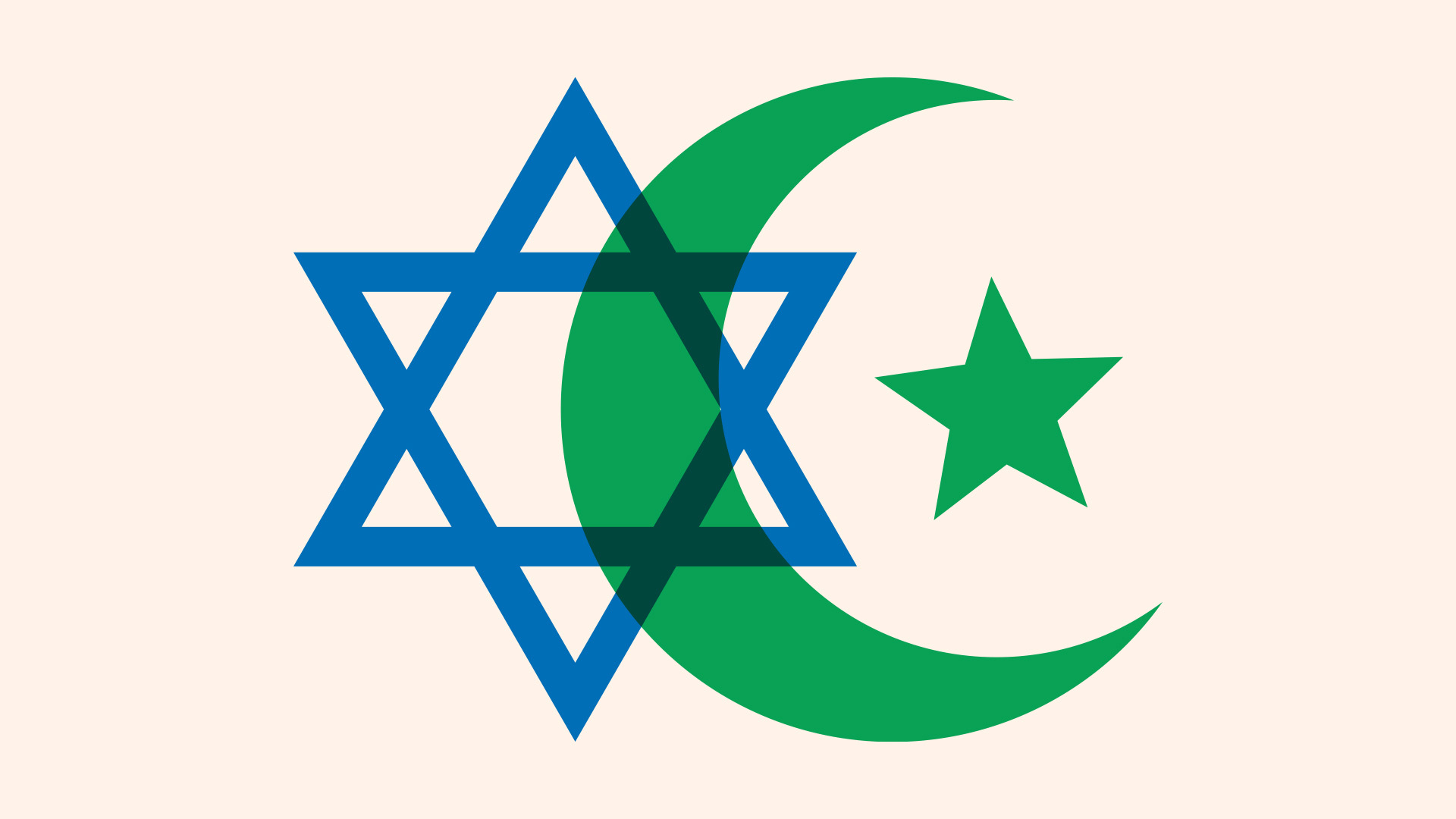
Illustration: Big Issue

For the past 10 years I have taught a seminar at the London School of Economics and Political Science entitled ‘Muslim-Jewish Relations: History and Memory in the Middle East and Europe’. Many of the students are young Jewish or Muslim men and women from London, who grew up among the other group and have a desire to learn more about them. 

When the topic is ‘Judeo-Muslim Religious Symbiosis’ I pass out two dozen notecards with hand-written phrases on them. The students’ assignment is to say whether the phrase on the card refers to Judaism or Islam. As many times as not, the answer is both – from “Jerusalem is a holy city” and “Dietary restrictions: no pork!” to “Purification before prayer” and “Circumcise your sons”. How many know about such similarity, the intimate rivalry and cooperation? 

Get the latest news and insight into how the Big Issue magazine is made by signing up for the Inside Big Issue newsletter

With this knowledge, is it right to depict relations between Jews and Muslims in a negative way? Is the last century of conflict between Israelis and Palestinians representative of the past? My book, Children of Abraham, tells the true story of the relationship of Jews and Muslims from the seventh century to the 21st century. It covers 1,415 years, from around 610, when Muslims say that Muhammad started to preach, to today, in the Middle East and in Europe.

There are four moments across this history when Jews are either more powerful than Muslims or hold power over them. For the rest of this history, Muslims hold power over Jews. At times, Christians hold power over both, favouring one group or the other, usually the Jews. And whenever Christians enter the scene, relations between Jews and Muslims worsen. 

Over the centuries, we see the same themes repeating: the Jew as ally of the Muslim; the Muslim as the saviour of the Jew; Jewish-Muslim religious and secular symbiosis; the rise of elite Jews to positions of wealth and influence and their subsequent fall as Muslims perceive a violation of the dhimma pact (pact of protection); the triangular relation with Christians which worsens Jewish-Muslim relations; and the political use of myth and counter-myth obscuring that history. 
Advertising helps fund Big Issue’s mission to end poverty

Telling the history of Jewish-Muslim relations through these themes is a way of arguing against two dominant myths: that the history of the Jewish-Muslim relationship is one of interfaith utopia, or that it is one of Jewish-Muslim enmity or antagonistic rivalries of violence and persecution by the powerful group. 

Read more:

The myth of interfaith utopia is the story of Jewish-Muslim harmony, where the two groups get on so well that it seems that nothing can get between them. This myth is drawing on an exaggeration of historical experience. Jews themselves, from very early on in their relation with Muslims, write about Muslims to other Jews, praising them for allowing them to be Jews, especially when Christians do not. 

The second myth also has its moments in history. It is based upon the idea that Jews and Muslims are at loggerheads, that Jews and Muslims are committing violence against each other, that the Muslim or the Jewish ruler over the other group is persecuting them. It’s also grounded in fact, but exaggerated. 

This myth of perpetual, perennial enmity from time immemorial is a more recent story. 

Muslims and Jews have engaged one another, sometimes for better, sometimes as partners, for over 1,400 years. But because of the Israeli-Palestinian conflict, which fills our screens daily, most discussions of Jewish-Muslim relations in history are stuck focusing on the worst aspects of relations today. We do not have to close our eyes or deny what is occurring there.

Advertising helps fund Big Issue’s mission to end poverty

Nor must we be beholden to either the myth of interfaith utopia or an antagonistic view of relentless violence and persecution. Just as at the beginning when Muhammad first met Jewish Arabs in Arabia in the seventh century, Jewish and Muslim relations span the spectrum of human interaction from love and friendship to hate and violence. 

What is needed is a book telling the unknown, forgotten or purposely buried story of the connected histories of Jews and Muslims in the Middle East and Europe, from their earliest relations in Arabia to relations in the Middle East and Europe today. What is needed is a retelling of their relations without myth and counter-myth. Children of Abraham is that book.

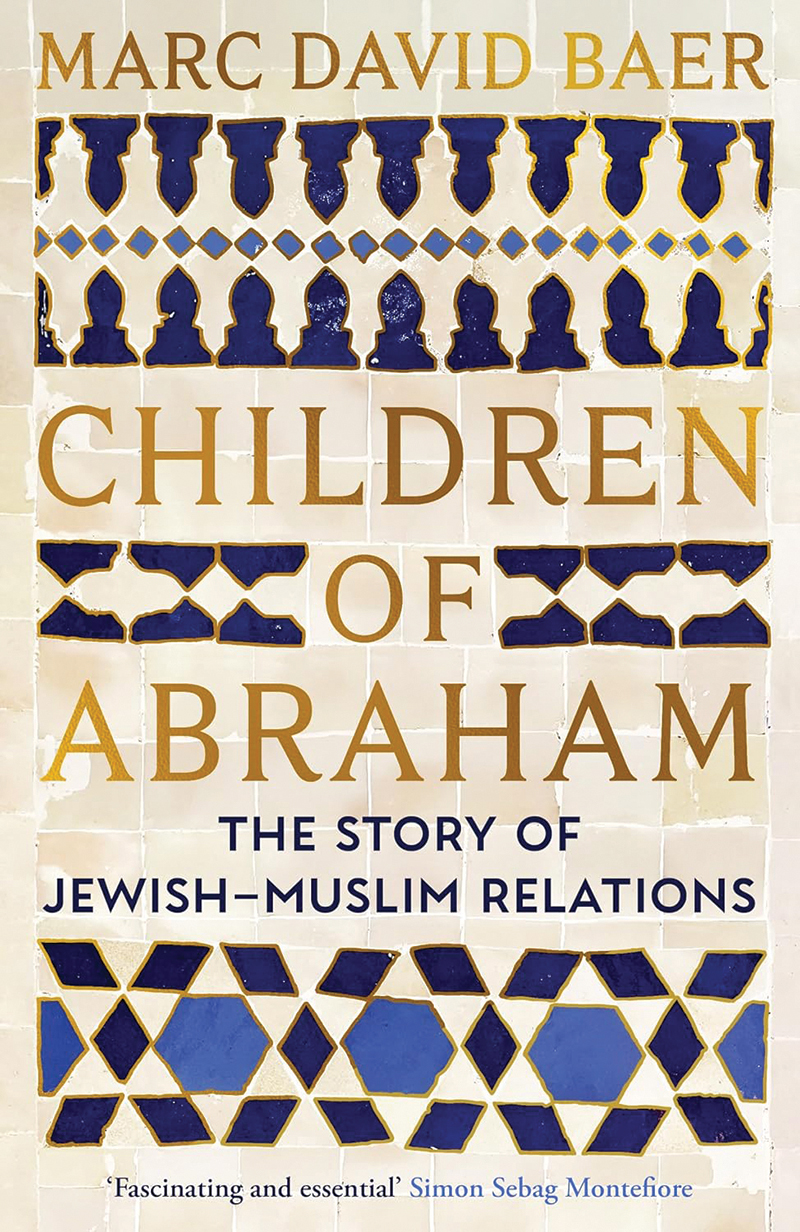
Children of Abraham: The Story of Jewish-Muslim Relations by Marc David Baer is out on 2 April (Profile, £30).

You can buy it from the Big Issue shop on bookshop.org, which helps to support Big Issue and independent bookshops.

Do you have a story to tell or opinions to share about this? Get in touch and tell us more

Change a vendor’s life.

Advertising helps fund Big Issue’s mission to end poverty

Buy from your local Big Issue vendor every week – and always take the magazine. It’s how vendors earn with dignity and move forward.

You can also support online:
Subscribe to the magazine or support our work with a monthly gift. Your support helps vendors earn, learn and thrive while strengthening our frontline services.

Thank you for standing with Big Issue vendors.

Advertising helps fund Big Issue’s mission to end poverty

DO YOU KNOW HOW BIG ISSUE 'REALLY' WORKS?

Watch this simple explanation.

Recommended for you

View all
Top 5 books about returning home, selected by Susannah Dickey  
Top 5

Top 5 books about returning home, selected by Susannah Dickey  

Nowhere Burning by Catriona Ward book review: slow-burn thriller with a nerve-shredding finale
Review

Nowhere Burning by Catriona Ward book review: slow-burn thriller with a nerve-shredding finale

Crux by Gabriel Tallent book review: feats of wild imagination
Review

Crux by Gabriel Tallent book review: feats of wild imagination

My plan for the future is to die on a weekend
Books

My plan for the future is to die on a weekend