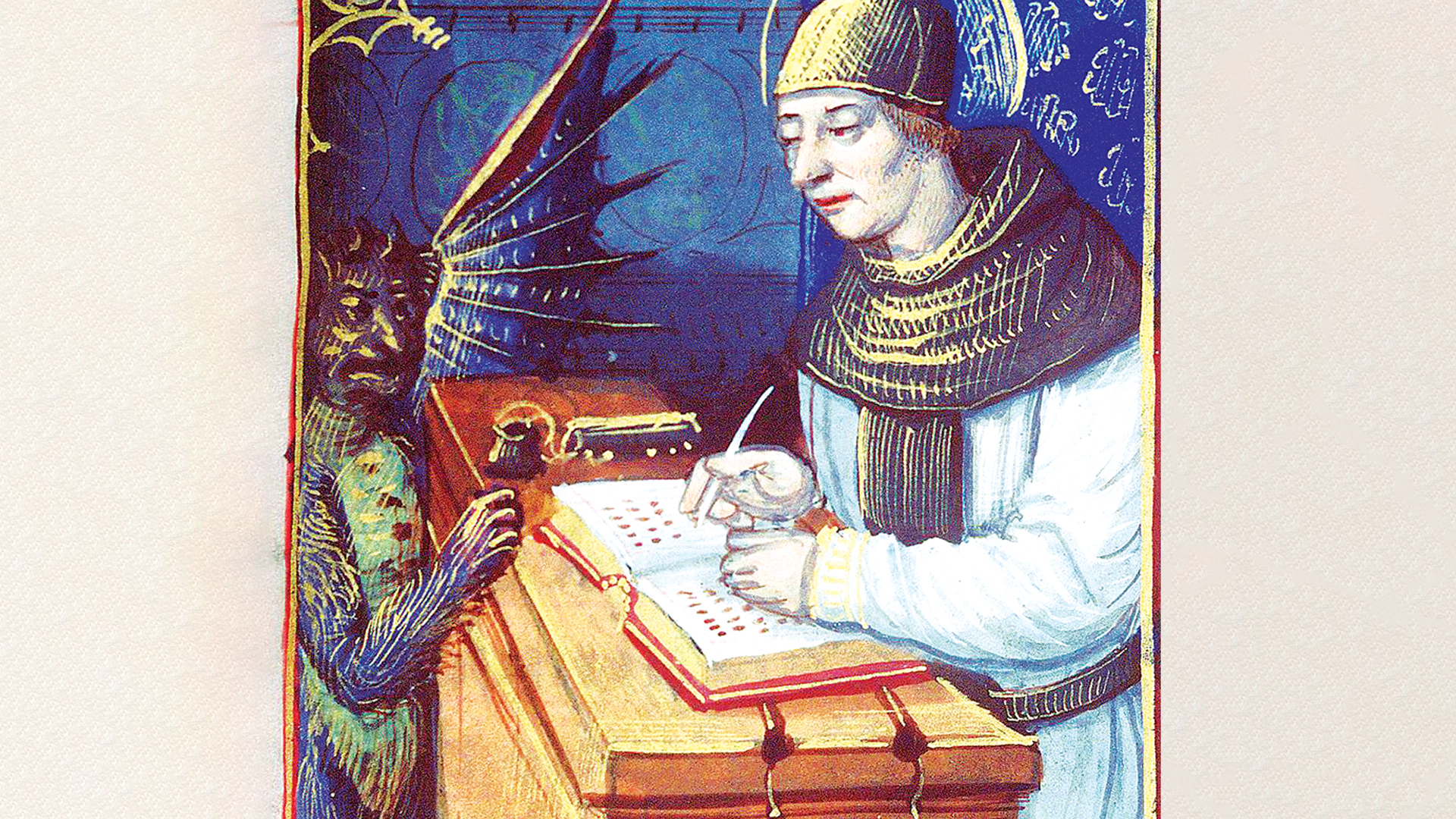
The youngest members of the industry – the apprentices – became known as ‘printer’s devils’. Broken and battered type was sent to ‘hell’, or to the ‘hell box’, where it had a final chance for redemption: to be melted down and re-cast to print another day.
While Titivillus was happy to meddle in the micro of typos, the words and sentences thus formed were preparing to go even bigger on blunders. As Petrarch observed, “Books have led some to learning, and some to madness.” From purple prose and ick lit (writing so bad you can’t help talking about it) to flagrant plagiarism and outlandish literary hoaxes, there’s something about books that brings out the most human in the human spirit.
Pilfering words and passing them off as your own, pretending to be someone or something that you’re not, discrediting entire literary movements, fuelling rivalries and jealousies that echo down the centuries.
Keep reading the journalism that powers our mission
Register free to continue and learn more about the stories, campaigns and the support we provide, helping people facing poverty across the UK.
Read more:
Take the Ern Malley affair of 1944, when two Australian poets concocted a fictional modernist genius and 16 deliberately nonsensical poems, mailed them to a leading avant-garde magazine, and watched the editor hail them as a major new voice. When the hoax was exposed, Australian experimental poetry never quite recovered – though, Malley’s poems are now better remembered than the men who wrote them.
It’s not just writers who can inadvertently evoke the chaotic spirit of Titivillus. Readers are at risk, too – often falling prey to that most virulent of conditions: bibliophilia. There’s a fine line between the romance of a personal book collection – throughout history a popular symbol of education and intellectual curiosity – and the fate of Sir Thomas Phillipps, the 19th-century bibliomaniac whose hoard was so vast that, when he died in 1872, it took 100 years to disperse. His grandson spent 50 years of his life supervising the sale. Marie Kondo might have had the right idea.
Gutenberg’s invention highlighted the conflict between the old (the manuscript) and the new (the printed book). Today’s discord is even more profound: that former upstart is now under threat from a host of new technologies and trends. And the stakes are higher than ever.
Can the book survive the challenges of ebooks, audiobooks and AI? Are we ushering in a golden age of enhanced partnership between writers and readers; liberating and force-multiplying our human creativity with the speed, vision and precision of machine learning? Or will it cannibalise our creativity, collapse the publishing industry and destroy our storytelling abilities?
Perhaps the only thing we know for sure is that even if books one day disappear, stories will not, until we do. As the writer William Boyd noted, “Stories seem to answer something very deep in our nature, as if, for the duration of its telling, something special has been created, some essence of our experience extrapolated, some temporary sense has been made of our common, turbulent journey towards the grave and oblivion.”
The book as an object has always had its own story, and that will never change. The next generation of storytellers will build on what is already there, just as today’s stories weave in elements of yesterday’s. We’re moving towards a time where a word will always be retrievable, and hence never forgotten. The reading horizon will be limitless. And so will Titivillus’s reach.
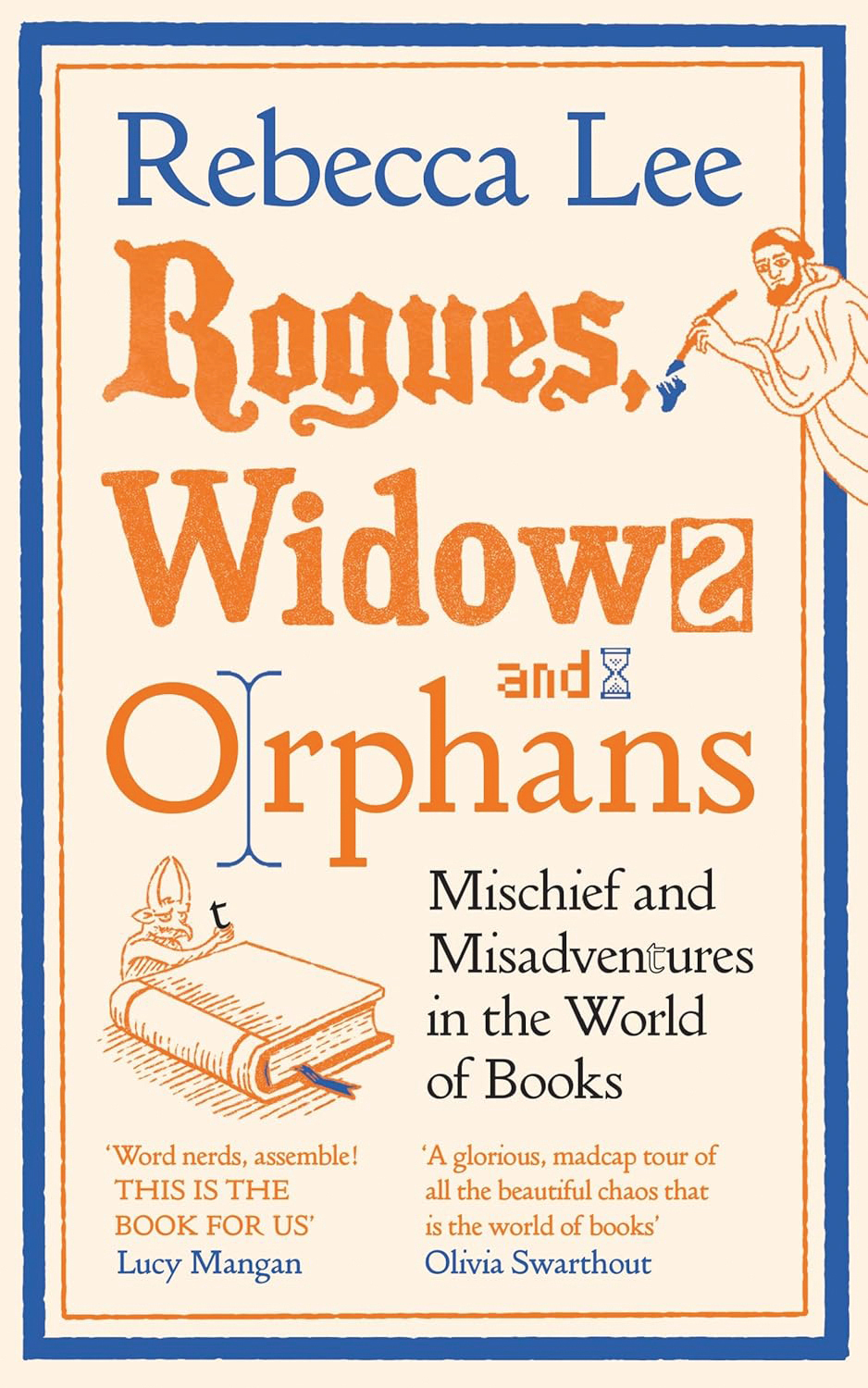
Rogues, Widows and Orphans: Mischief and Misadventures in the World of Books by Rebecca Lee is out now (Profile, £20).
You can buy it from the Big Issue shop on bookshop.org, which helps to support Big Issue and independent bookshops.
Do you have a story to tell or opinions to share about this? Get in touch and tell us more.
Change a vendor’s life.
Buy from your local Big Issue vendor every week – and always take the magazine. It’s how vendors earn with dignity and move forward.
You can also support online:
Subscribe to the magazine or support our work with a monthly gift. Your support helps vendors earn, learn and thrive while strengthening our frontline services.
Thank you for standing with Big Issue vendors.