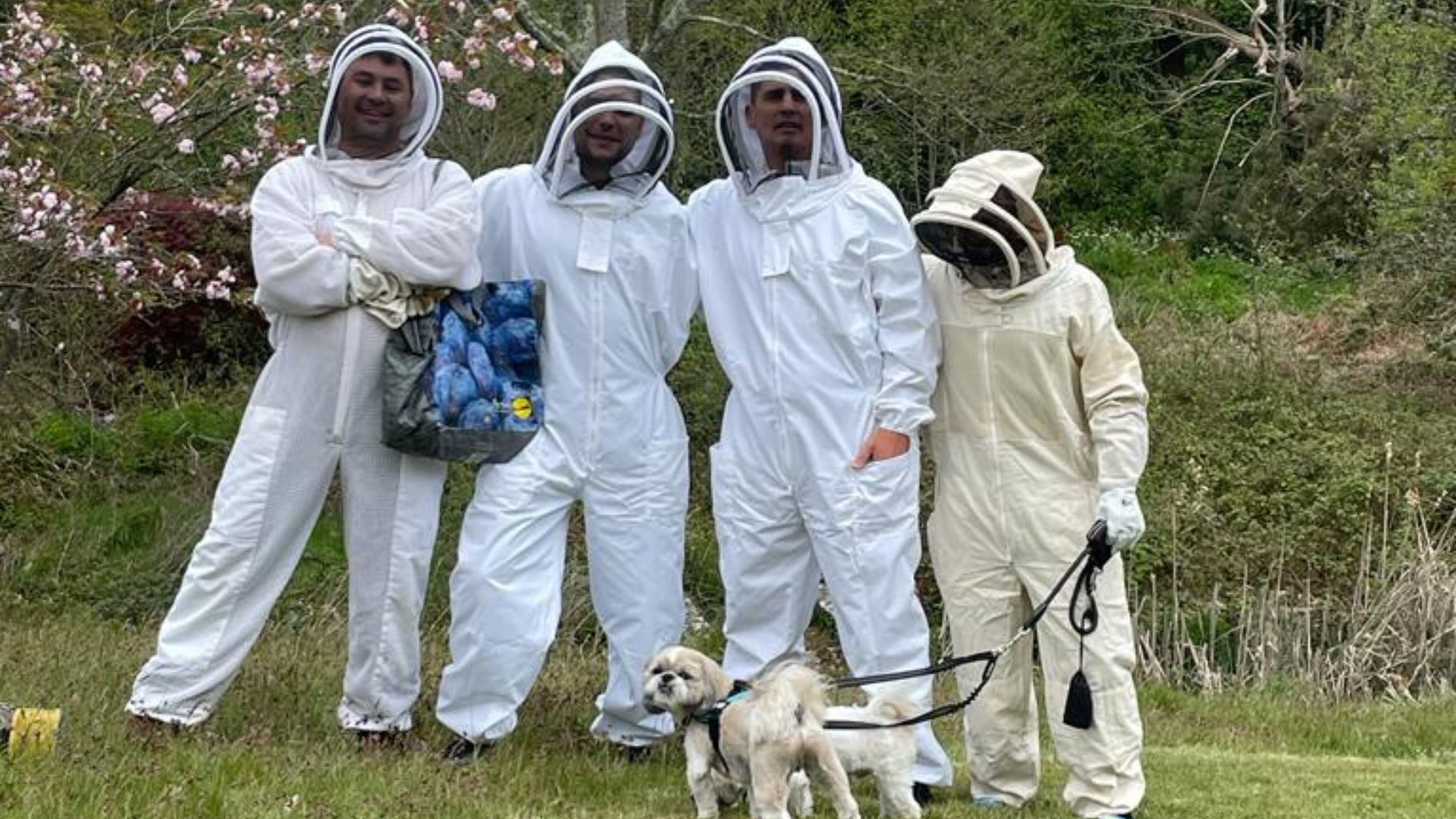
Chucky, trainee beekeeper, second from the right. Credit: supplied
Share
When most people identify as an “animal person”, they’re keen on dogs and cats – but for Chucky, it’s bees.
“Bees, they help pollinate everything,” the Bournemouth local tells Big Issue. “If we don’t have the bees, we’ll have no fruit, no veg, nothing. The flowers, everything.” And then there’s the honey. “On toast with jam,” he says. “That’s the best.”
The 42-year-old is about to embark on a beekeeping course. After spending years in and out of homelessness – eight years, on and off, of HMOs and evictions and “starting again” – he is not your usual recruit to the profession. But he’s looking forward to it. “It’s something different,” he says. “I just thought, yeah, why not?”
Chucky works with Bee Mission, a Dorset-based community interest company with an unusual double mission. The organisation has installed 63 beehives across the south of England and is aiming for 500. It also cooks up to 50 hot meals three times a week for people sleeping rough in Bournemouth.
“It can be chaos, to be honest,” says volunteer coordinator Amy Foster, known in the organisation as ‘Aunty Bee’. “But the amount of homelessness and rough sleeping down here, there isn’t much of a choice but to do something.”
Advertising helps fund Big Issue’s mission to end poverty
Advertising helps fund Big Issue’s mission to end poverty
Bournemouth has one of the worst rough sleeping problems outside London. On a single night in May 2025, 108 people were estimated to be sleeping rough in the area – the highest figure recorded since 2010.
Part of what drives the numbers is structural to coastal towns: a large seasonal hospitality sector means fluctuating employment and economic unpredictability. Meanwhile, short term lets reduce the existing housing stock. In 2024-25, Bournemouth, Christchurch and Pool (BCP) Council determined that 2,767 households needed formal intervention due to homelessness or the threat of it – double the figure from 2020. Big Issue explored problems endemic to the coast in our most recent issue.
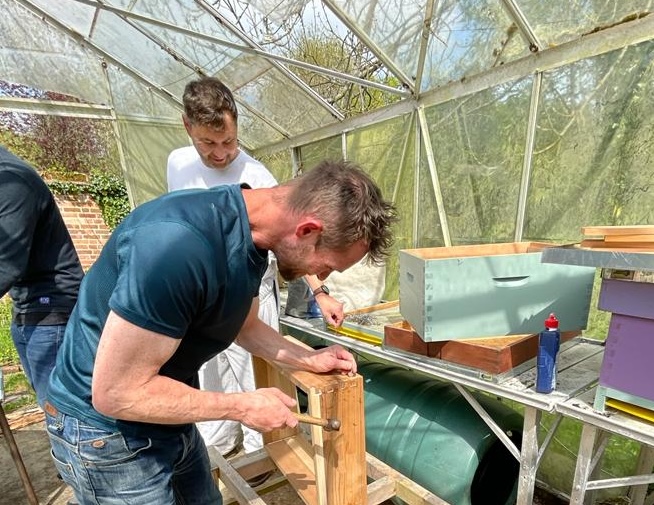
Chucky working on building the hives. Credit: Supplied.
Bee Mission is one response to this problem. The whole thing started in a van; founder Chris Bialan was helping his daughter move house in 2019 when he got talking to the driver, Serge. Serge had been keeping bees for nine years. Four hours on the road later, Bee Mission had been conceived. Serge is now the organisation’s head beekeeper and carpenter-in-residence.
Keep reading the journalism that powers our mission
Register free to continue and learn more about the stories, campaigns and the support we provide, helping people facing poverty across the UK.
The community interest company (CIC) places hives on rooftops, pub grounds, care home gardens and community spaces, maintaining them through a small team of beekeepers while selling the honey to fund the whole operation.
British bee populations are collapsing under the combined pressure of pesticides, parasites and habitat destruction. Around 13 species have gone extinct in Britain, and a further 35 are currently at risk. By 2024, bumblebee numbers had declined by almost a quarter compared with the 2010–2023 average, according to the Bumblebee Conservation Trust.
The science on managed honeybee colonies is more complicated than just “saving the bees” – research shows that high densities of honey hives can outcompete wild bee species for food and spread pathogens to them.
Advertising helps fund Big Issue’s mission to end poverty
But Bee Mission’s hives aren’t in protected natural areas; they’re on rooftops and other urban areas, which limits the risk to local wild species.
The profits from honey sales go directly into the food programme. “The demand has gone up,” Foster says. “Overall it’s thousands of meals a year.”
Bee Mission isn’t the only Bournemouth organisation feeding hungry locals. Bournemouth Foodbank provided emergency food parcels to 13,040 individuals in the past year – including 3,384 children – a 4.3% increase on the year before and nearly 80% higher than five years ago. The organisation gave out more than 100,000 meals in 2024, and has seen a continuous increase in demand since 2017.
Amy and Chucky met when he was hungry.
“Amy was going into Tesco’s, I think it was, and she asked if I wanted some food,” he recalls. “And then she said that she was thinking of starting a food service for homeless people, and that was the start.”
Amy asked if he’d help cook. “I was like, ‘yeah’,” he says. He volunteers on and off, which he “likes doing”. The deliveries came next, then hive-building with Serge. He did the painting and sanding.
Advertising helps fund Big Issue’s mission to end poverty
He’d like, eventually, to start a restaurant. “[I’d like to be] married, family, a job – or me in business,” he says, when asked about the future. He’d like beekeeping to be part of it, too, maybe as a hobby.
To that end, Amy has signed him up for a beekeeping course. Eventually, Bee Mission wants to actively recruit people experiencing homelessness into the beekeeping operation itself, offering training and qualifications as a route into work.
“That’s going to be good,” he says. “Because I do like the bees.”
Buy from your local Big Issue vendor every week – and always take the magazine. It’s how vendors earn with dignity and move forward.
Advertising helps fund Big Issue’s mission to end poverty
You can also support online: Subscribe to the magazine or support our work with a monthly gift. Your support helps vendors earn, learn and thrive while strengthening our frontline services.
Thank you for standing with Big Issue vendors.
Advertising helps fund Big Issue’s mission to end poverty