'At your sick child's bedside, the last thing you need is to not feel supported financially'
Hugh's Law is currently being considered by the government. It would enhance the employment rights of parents with seriously ill children and bereaved parents
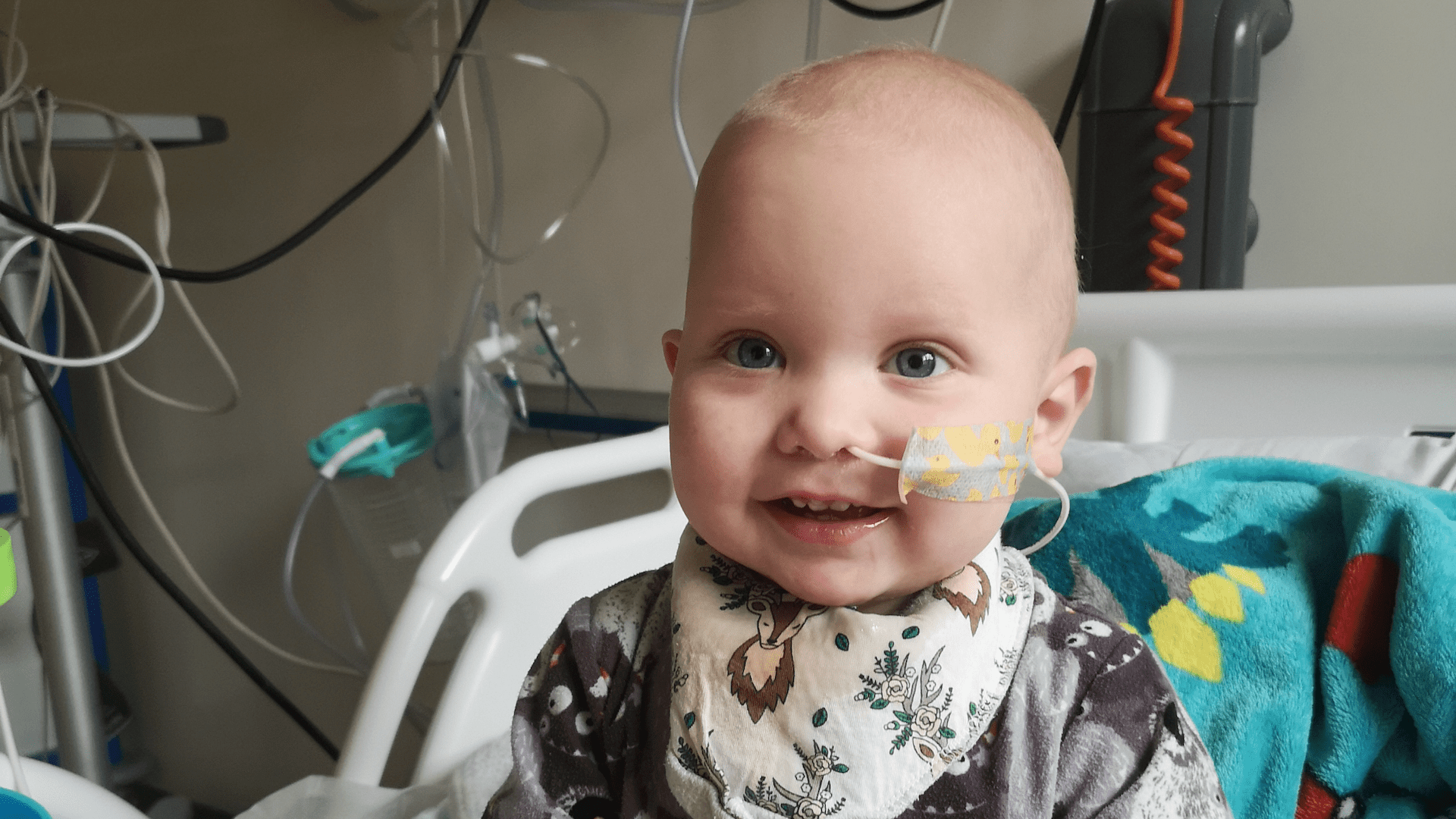
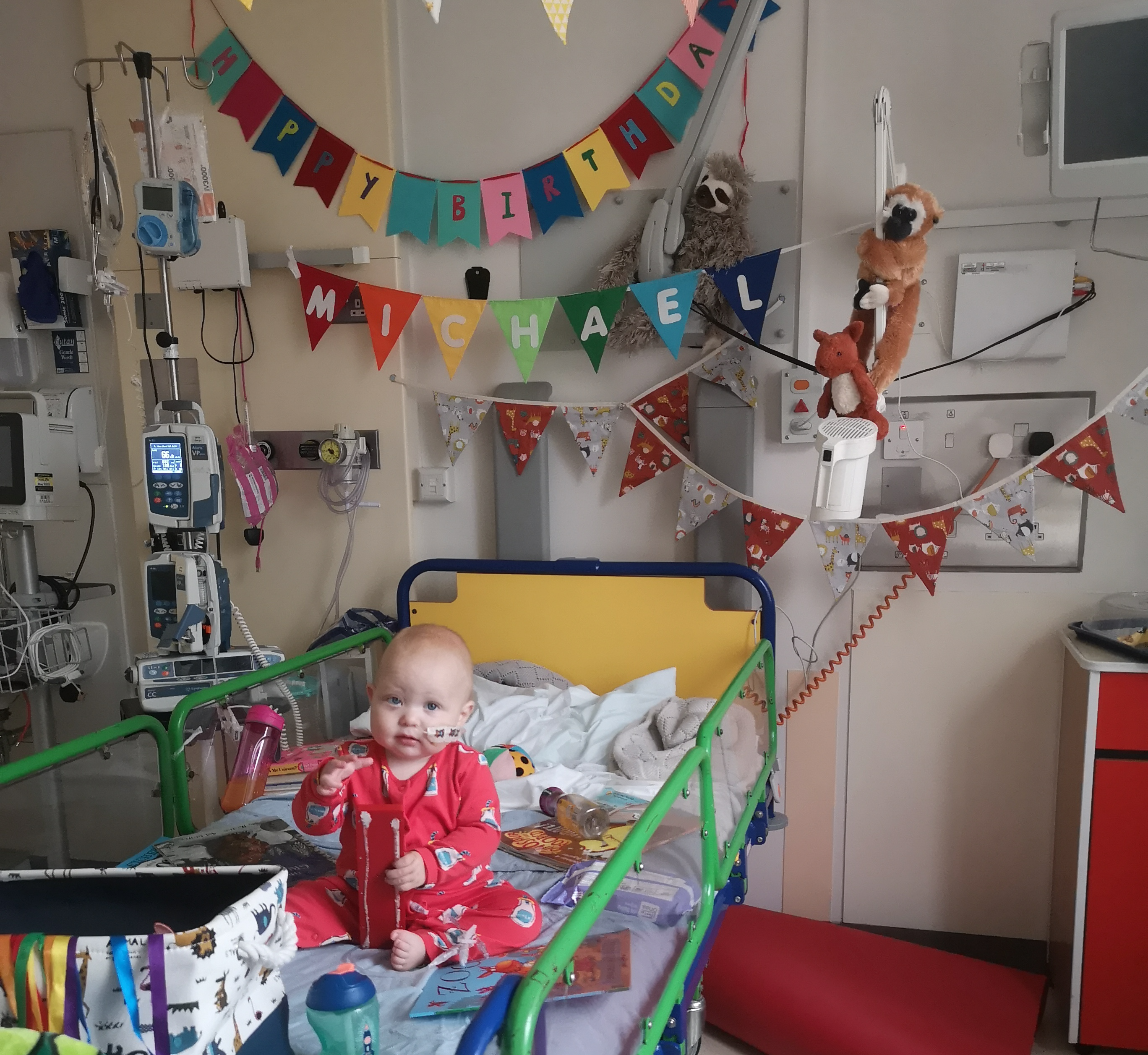
Michael Duffy, who is now a healthy five-year-old but had an aggressive form of childhood cancer. Image: Supplied
Share
Vinnie was diagnosed with leukaemia when he was four years old.
His mother Sarah Kent took a year off work to look after him and, after he was through with the most intensive therapies, she tried to start work again to support their family of two. But Vinnie’s immune system has been weakened so significantly that he is unable to go to school.
“Trying to manage him not being in school while trying to keep a job was physically impossible,” says Kent, a single mother who works for the NHS in cardiology. “You’re battling everything and trying to get an income. That’s been an absolute nightmare. I’m having to take a career break.
“When you’re going through something already, which is caring for your son, the last thing you need is to feel like you’re not supported financially.”
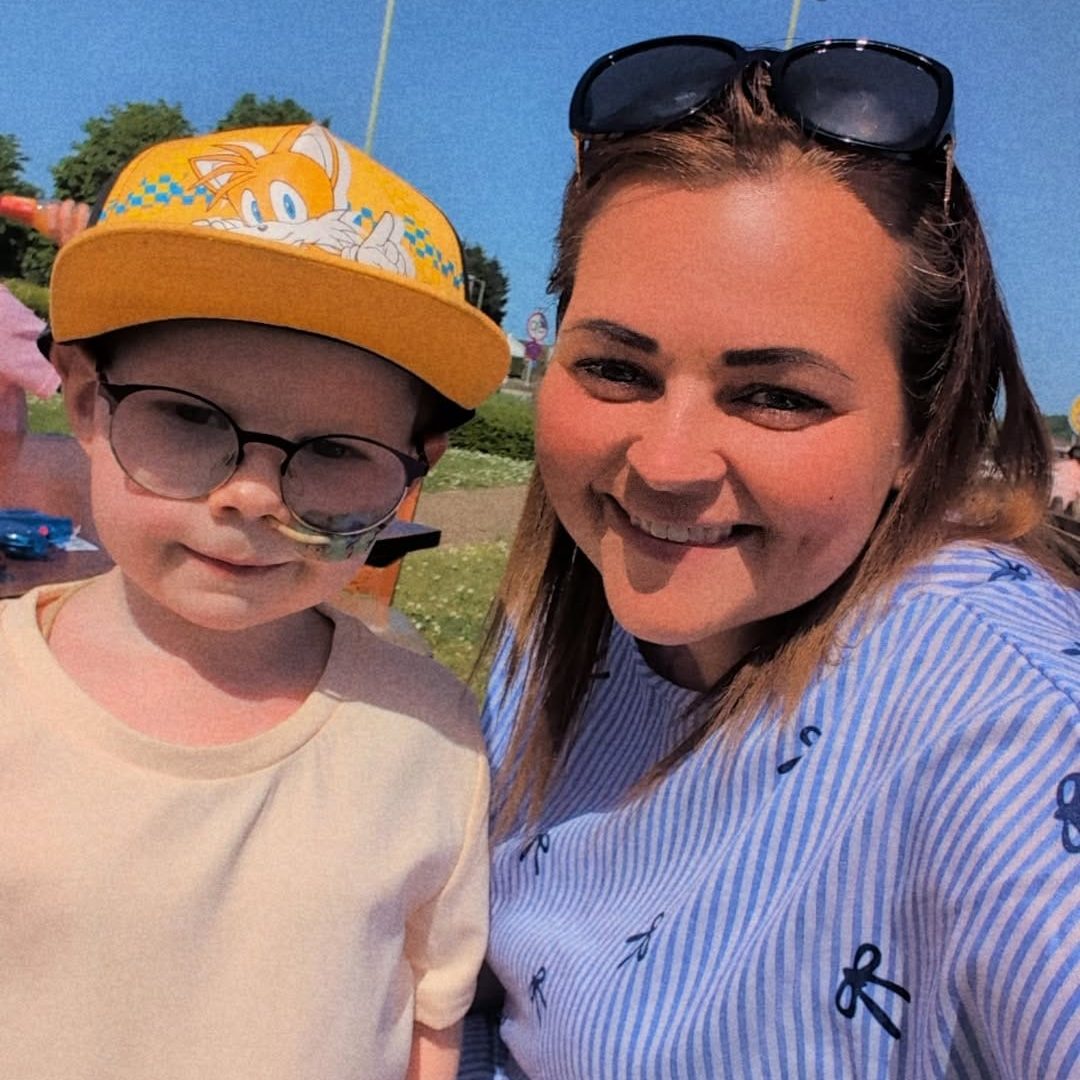
Sarah Kent and her son Vinnie. Image: Supplied
Parents of seriously ill children and bereaved parents are campaigning for change.
Ceri Menai-Davis tragically lost his six-year-old son Hugh after a 10-month battle with cancer in 2021, and he made it his mission to help other families. He founded charity It’s Never You to create a community for parents with similar experiences.
Advertising helps fund Big Issue’s mission to end poverty
Advertising helps fund Big Issue’s mission to end poverty
“When Hugh passed away, I said to my wife: ‘If we can help another family to go through this, it wasn’t for the sake of it. We can’t prevent what happened to us, but we could use all of what we went through to help others.’ We set up the charity for that reason. I also said that we would make sure everyone knew his name.”
Menai-Davis proposed Hugh’s Law in 2023. The legislation would give parents of seriously ill children financial protections, ensuring their employment is not at risk and introducing statutory leave and pay for parents of critically ill children.
It is currently being considered by the government as part of a public consultation into enhancing the employment rights of unpaid carers.
Keep reading the journalism that powers our mission
Register free to continue and learn more about the stories, campaigns and the support we provide, helping people facing poverty across the UK.
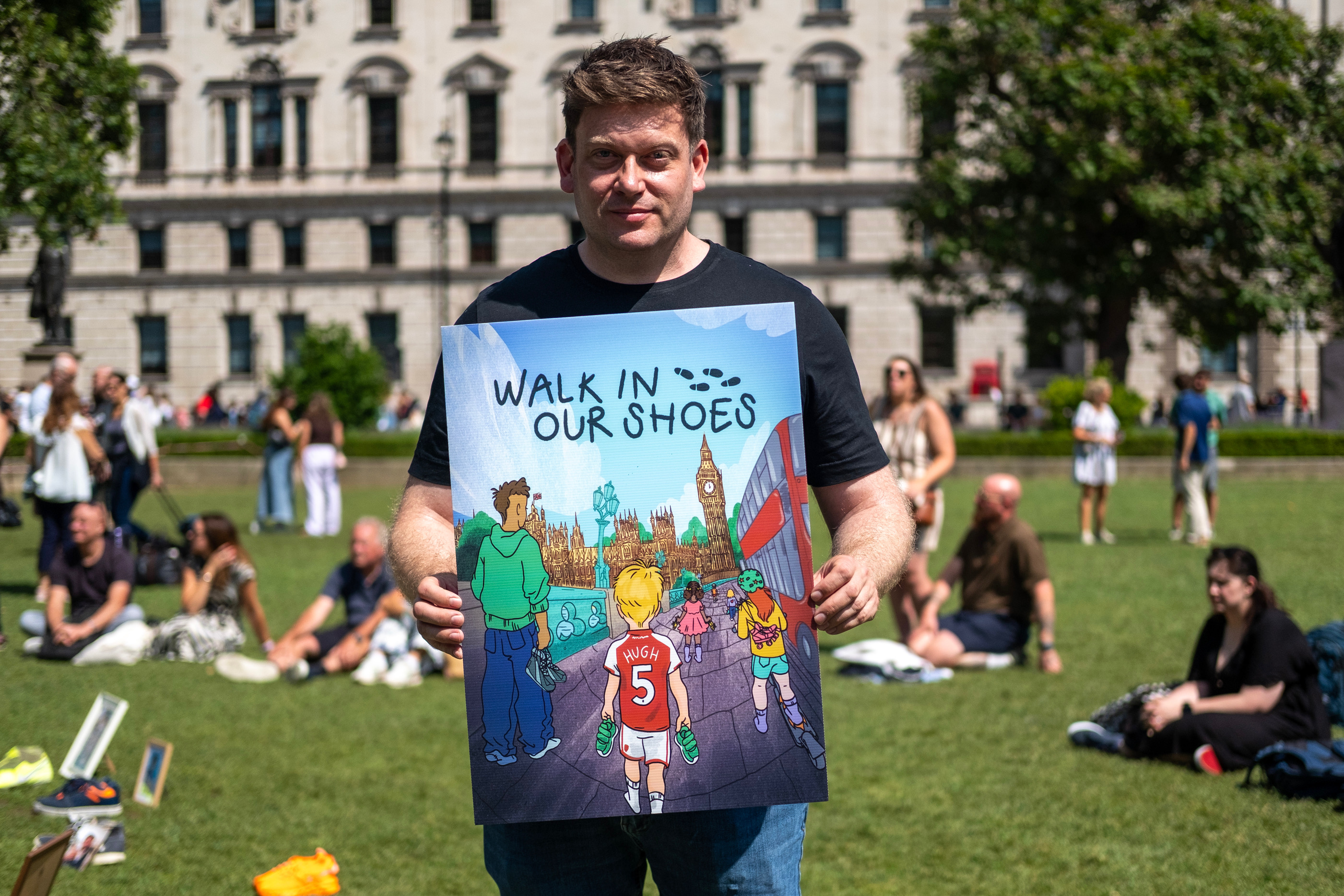
Ceri Menai-Davis, who is the founder of charity It’s Never You. Image: Supplied
“At the moment, if a child is taken seriously ill and you have to leave work, there’s no legislation in place to protect the parent to be by the bedside of that child,” Menai-Davis says. “In the first year of a child’s life, parents are afforded maternity, paternity, neonatal and shared parental leave.
“If that same child is two years old, five years old, eight years old, 10 years old, and they’re diagnosed with serious illness like cancer, like Hugh was, that parent has to leave work immediately to be by the bedside. But there’s no specific legislation in place to enable them to do that.”
Parents can take unpaid leave, but the law only gives carers the right to five days each year. Beyond that is up to the employer. They can claim disability living allowance (DLA) but that can only be applied for three months after a diagnosis.
Advertising helps fund Big Issue’s mission to end poverty
Kent applied for universal credit through the Department for Work and Pensions (DWP) but was repeatedly asked to provide proof that she was looking for work. “They’re on the phone to me asking me to look for a job, and he’s having chemotherapy,” she says.
Vinnie is currently in the maintenance stage of the cancer treatment, and they have another year before he is through treatment. “I just want him to get through this and get better. I want to go back to work. He wants to go back to school,” Kent says.
She is now facing further struggles with Vinnie’s DLA as his mobility element was recently reduced, a decision which she is appealing.
“We are going through enough of a fight with our children,” she says. “We don’t need to be fighting for financial support.”
Sarah Kent and son Vinnie. Image: Supplied
Hugh’s Law proposes that financial support should be paid automatically and there for at least the first 12 weeks after diagnosis.
Advertising helps fund Big Issue’s mission to end poverty
But the campaign has faced setbacks. Menai-Davis got close to making it law under the Conservative government, but the general election was called on the day of his last meeting with then employment minister Jo Churchill, and it was dropped. It was then blocked by the House of Lords as an amendment to the Employment Rights Bill.
But there is now another chance for Hugh’s Law to be put in the statute books through the carer’s leave consultation, which closes in September.
Business across the UK have already adopted the principles of Hugh’s Law into their employment policies, with 20,000 employees protected, including at Brentford Football Club, the first organisation to officially adopt Hugh’s Law.
“We have done something incredible in his name,” Menai-Davis says. “None of this would have happened if Hugh hadn’t passed away, but I’d give everything up in a heartbeat to have him still here. I feel like we’ve channelled our grief and pain into some sort of purpose, and it’s having a huge effect. It’s been such hard work. I can’t put into words how hard I’ve worked on this. I have given everything for four years.”
Around 95% of parents experience financial hardship following a child’s diagnosis, according to figures from It’s Never You. Meanwhile, 88% reduce their working hours or leave employment entirely, and 79% report a deterioration in mental health.
Menai-Davis had his own business, and Hugh was ill during lockdown which meant that furlough was in place, but through It’s Never You he has witnessed many other families burdened by financial pressures.
Advertising helps fund Big Issue’s mission to end poverty
“It was hard enough having Hugh seriously ill. But then if you compound that with the fact you can’t pay your mortgage, and then you’ve got the bailiffs on the phone, or you might have parking fines. They are easily done. You’ve parked in a car park and a hospital, and you’ve rushed into hospital and you haven’t put a parking ticket on your car or paid for parking. These things add up,” Menai-Davis says.
He adds: “I hear stories every day of parents selling homes, having to sell clothes on Vinted, making decisions about whether they can eat in hospital. And what that struggle does is wreaks havoc on their mental health.”
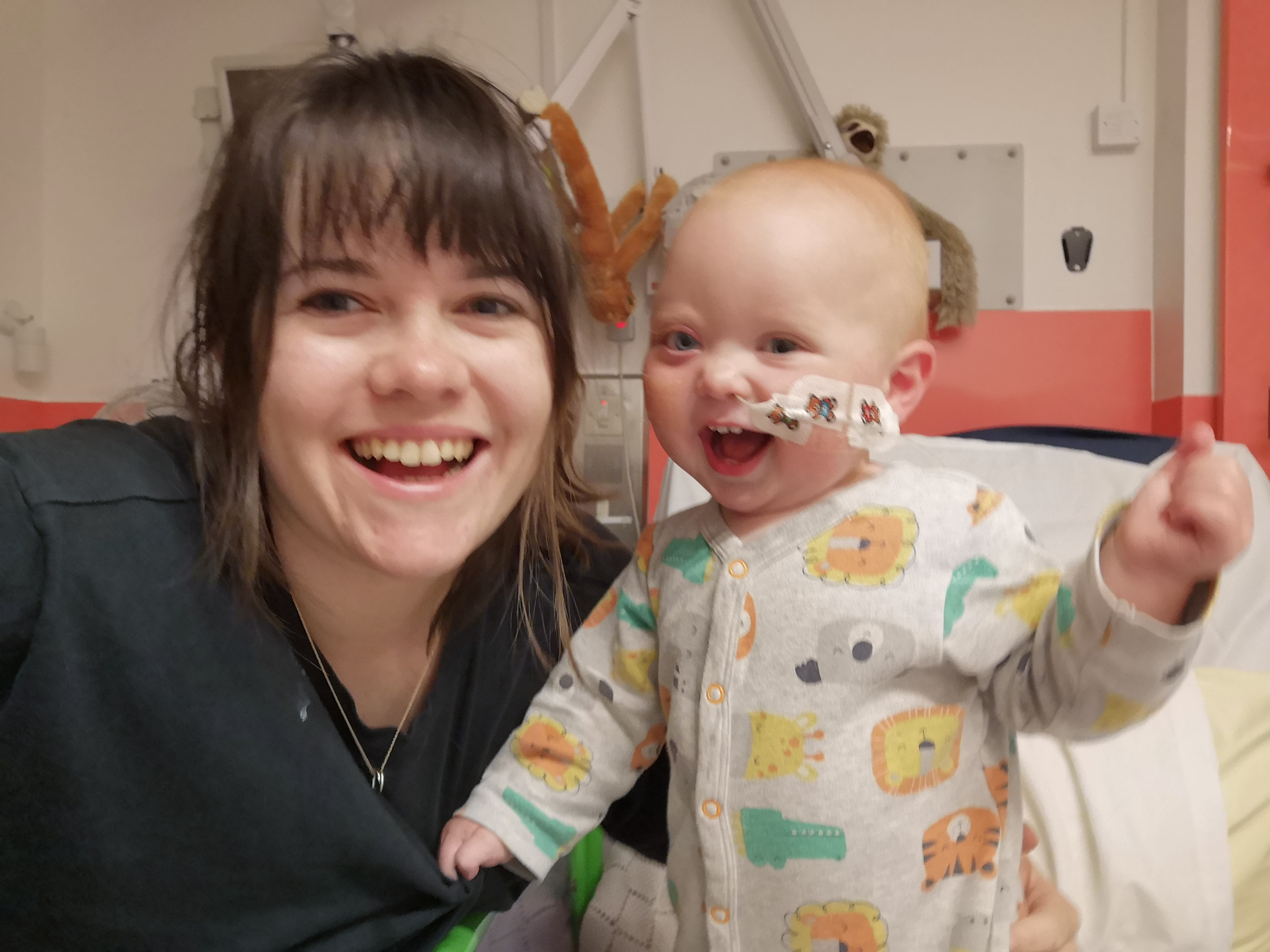
Helen Duffy and son Michael in hospital. Image: Supplied
Another parent affected is Helen Duffy. Her son Michael had a neonatal stroke when he was born and then, a couple of weeks before his first birthday, he was diagnosed with neuroblastoma, an aggressive cancer which was unrelated to the stroke.
Following the diagnosis, Duffy and her husband did not leave Great Ormond Street Hospital for three weeks because they wanted to be by Michael’s bedside.
“When your child is so young, on a good day, he’s running around, he’s got all these medical wires sticking out of him and you’re chasing after trying to stop all the wires getting tangle. On a bad day, you’re a critical part of their care. You’re there to notice if things are going wrong and to alert the medical team. There is no respite,” Duffy says.
She had two part-time jobs as a researcher in parliament and at a London university.
Advertising helps fund Big Issue’s mission to end poverty
“It’s impossible to work. It’s completely impossible to work. I think sometimes Ceri says parents are making this impossible choice. There was no choice. He was young. I was still breastfeeding him,” Duffy adds.
“There’s nowhere on the ward to work. Even if you work an office job that can be done remotely, it’s not the nurse’s job to watch your child or to help them go to the toilet to change their nappy. You need to be there constantly.”
Her husband wasn’t working either because they did not know how long they had left with Michael. Duffy says: “Is there anywhere that you want to be other than by your child’s side when they have cancer?”
Michael was in hospital for his first birthday. Image: Supplied
Duffy feels that her family were luckier than most because they had some savings.
“We had savings. We didn’t have to do a frankly humiliating fundraiser around friends and families just to be able to keep the lights on at home. But that is the reality for so many parents. I’ve seen heartbreaking situations of people losing their homes, losing everything. And that’s something that we think of that happens maybe in America where they don’t have privately funded healthcare. But unfortunately, it does happen here.”
For Duffy, her employer was supportive and her job was waiting for her on her return, but she says she has met “many parents for whom that wasn’t the case” who were left with significant gaps in their CV and limited opportunities.
Advertising helps fund Big Issue’s mission to end poverty
“I didn’t apply for DLA for about a year, because I found the form so upsetting,” Duffy admits. “It asks questions about how many minutes you spend washing your child’s hair every day. Your child doesn’t have hair if they’re having chemo. It is designed for a different type of child, so the questions feel very insulting. You wish that you could grab a big red pen and write across it: ‘My child can’t do anything.’
“It took me a long time to get that benefit because the administrative process was so upsetting. I’m pretty good with forms. If I struggled, think about other families for whom English isn’t their first language or don’t feel confident. It doesn’t have to be so hard.”
Menai-Davis adds that the financial difficulties can get worse when parents are bereaved, as DLA stops at midnight on the day the child dies.
“There’s no transition period. What are parents supposed to do? Are they supposed to go back to work? We’ve heard horror stories from parents whose child has died. Their means of income was DLA. They get the courage to go back to work, and then after their first paycheque, they get a message that their DLA needs to be paid back.”
Parents might be able to take bereavement leave, but they are only entitled to it if they have worked for 26 weeks beforehand, which is often not the case for parents of seriously or terminally ill children. There is also no support for self-employed people.
Duffy agrees that bereaved parents need tailored support. Michael is now a healthy and happy five-year-old, but others are not so lucky.
Advertising helps fund Big Issue’s mission to end poverty
“Losing a child is a loss so huge most of us can’t even bear to think about it,” Duffy says. “For some parents that is the reality that they are living with every day and the fact there isn’t consistent bereavement support is shameful. There’s so much more that can be done, but listening to parents should be the first thing that the government does.”
The government has, this week, published the first cross-government unpaid carers plan, setting out how to identify unpaid carers who need support at an earlier point.
A government spokesperson told Big Issue: “We recognise that parents of seriously ill children face immense emotional, practical and financial pressures, and the government is committed to making sure they receive the support they need.
“Child disability living allowance exists to help with the extra costs of caring for a seriously ill or disabled child, and special rules are already in place for children nearing the end of life, allowing families to access support more quickly.
“We know there is a rising demand for child DLA, which is why we have trained additional case managers to deal with these claims effectively, fairly and to a high standard.”