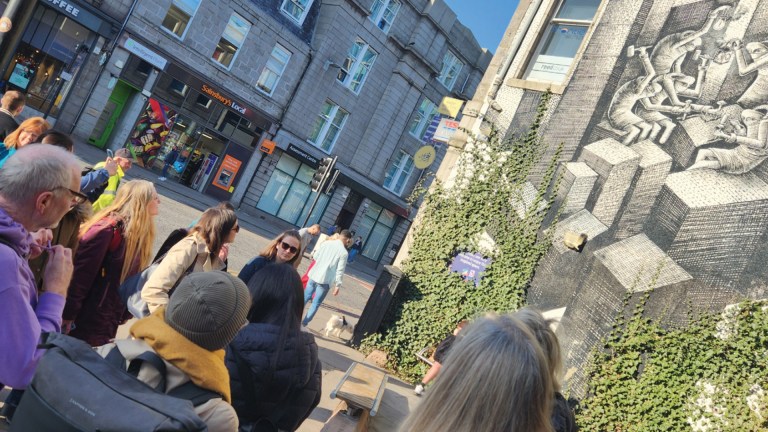
The night before we meet, Skead had done another shift for the women’s rough sleeping census, walking for hours and finishing at 10pm, and she saw and recorded five women sleeping rough in the borough.
The census is led by Single Homeless Project and Solace Women’s Aid, who work alongside Crisis and Change Grow Live to carry out the count. It takes place over a week across the country, with frontline workers searching spots where they believe women might be sleeping rough.
They also run meetings between local services when they cross-reference their records to try to uncover a clearer picture of how many women could be facing homelessness in the area.
Keep reading the journalism that powers our mission
Register free to continue and learn more about the stories, campaigns and the support we provide, helping people facing poverty across the UK.
Figures released this summer from last year’s count identified a total of 1,406 women rough sleeping across 101 local authorities through surveys. This is where women are found through outreach, with charity workers walking the streets to try to locate the women and ask them basic questions about themselves and their situation.
Meanwhile, local insight meetings uncovered 2,969 women across 42 councils.
This means there could be thousands of women missing from the official data. By comparison, the national rough sleeping snapshot, which relies on single-night counts and local authority estimates, only identified 733 women across 300 councils.
Advertising helps fund Big Issue’s mission to end poverty
“In Camden particularly we have a slightly higher proportion of women than other places,” Skead says. “We experience quite a lot of quite entrenched female rough sleepers.”
There are several services in the area which support women facing homelessness in Camden and neighbouring boroughs, such as Women at the Well, the soup kitchen at the American International Church on Tottenham Court Road and The Connection at St Martin-in-the-Fields. Skead feels this support may be “quite a draw” for women, keeping them close to the area. It means they are more likely to access support regularly, which can be vital for getting them off the streets.
“We experience quite a lot of cases where we see someone just for one time and then not again, so we feel it’s really important that when we meet a vulnerable woman that we can do something immediately there and then,” Skead explains.
When a person is referred to Single Homeless Project by StreetLink or a similar reporting system, “it’s quite likely that by the time we’ve gone to that place that they’re no longer there”.
“There’s a real urgency to act in the moment as soon as you come across someone, particularly when you’re doing women’s work,” Skead adds.
“Quite often we’ll look at emergency bed space in hostels or a hotel if needed so we can keep someone in one place long enough to get to unpick the story.”
Advertising helps fund Big Issue’s mission to end poverty
As we continue trying to find women to record for the census, we try a hospital waiting room. As Big Issue reported recently, people facing homelessness are increasingly turning up at hospitals in search of shelter. But this one is a private hospital with steely-eyed security guards and manned gates, so we have no luck there.
Then we stop at Swiss Cottage Library and search the wide-open floors for women who might be passing time and resting beside the bookshelves. Libraries across the country often open their doors for people who are vulnerable and may be looking for somewhere to shelter in their daytime opening hours.
The security guard tells us that he sees women sometimes who he believes are facing homelessness. They come into the library with big bags and return days or weeks later. He has thought that they might not have a home, but he doesn’t ask questions, he says. Skead passes over a leaflet and asks him to call Single Homeless Project next time. They might be able to get these women support.
Women may not always want help, Skead tells me, and they may not admit that they are facing homelessness, but it is important that they know that it is there if they need it. They might never have been asked if they need help before.
“It needs such a specialist approach,” Skead says. “We need to know that there are provisions specifically for women. A lot of the off the street options that we use have spaces for women, but a lot of women have deliberately tried to spend time not sleeping anywhere public, so going to sleep in a shared space can be quite a difficult ask.
“It’s not necessarily the case that a woman is going to feel comfortable around other rough sleeping women, because that might be a group that they have experienced harm from too. What we need is more immediate off the street options where people are able to have their own quiet, safe space, and to be able to do that quickly whilst we have someone in front of us.
Advertising helps fund Big Issue’s mission to end poverty
“Sometimes it takes time to build trust, and if we spend a lot of that time asking people quite invasive questions that are needed to get them into a placement, we might lose that person’s interest or willingness. It’s about building that relationship and gently asking them things.”
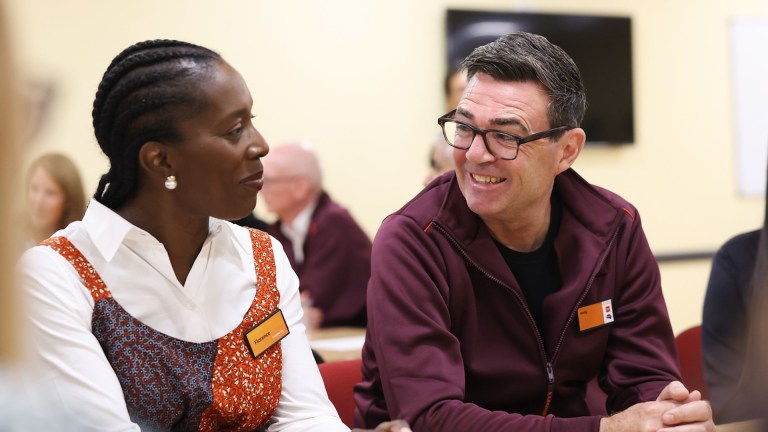
Perhaps Burnham could learn from this as he embarks on his mission to end rough sleeping. It’s about more than giving people a route off the streets. It’s about keeping them off the streets.
If the prime minister truly wants to end rough sleeping, he must not forget the thousands of women who might need more specialist support – or he risks leaving them behind on the streets, hidden from danger but also hidden from the people who would like to help.
Do you have a story to tell or opinions to share about this? Get in touch and tell us more.
Change a vendor’s life.
Buy from your local Big Issue vendor every week – and always take the magazine. It’s how vendors earn with dignity and move forward.
Advertising helps fund Big Issue’s mission to end poverty
You can also support online:
Subscribe to the magazine or support our work with a monthly gift. Your support helps vendors earn, learn and thrive while strengthening our frontline services.
Thank you for standing with Big Issue vendors.