Baby banks are becoming 'as normalised as food banks' as 1,000 children a day need support
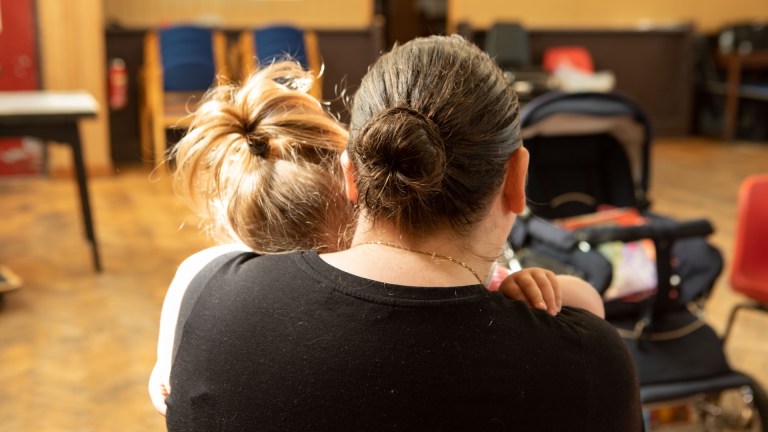
More than 1,000 children a day in the UK are being supported by baby banks, stark new figures have revealed
by: Lara Hedge
29 Jun 2026
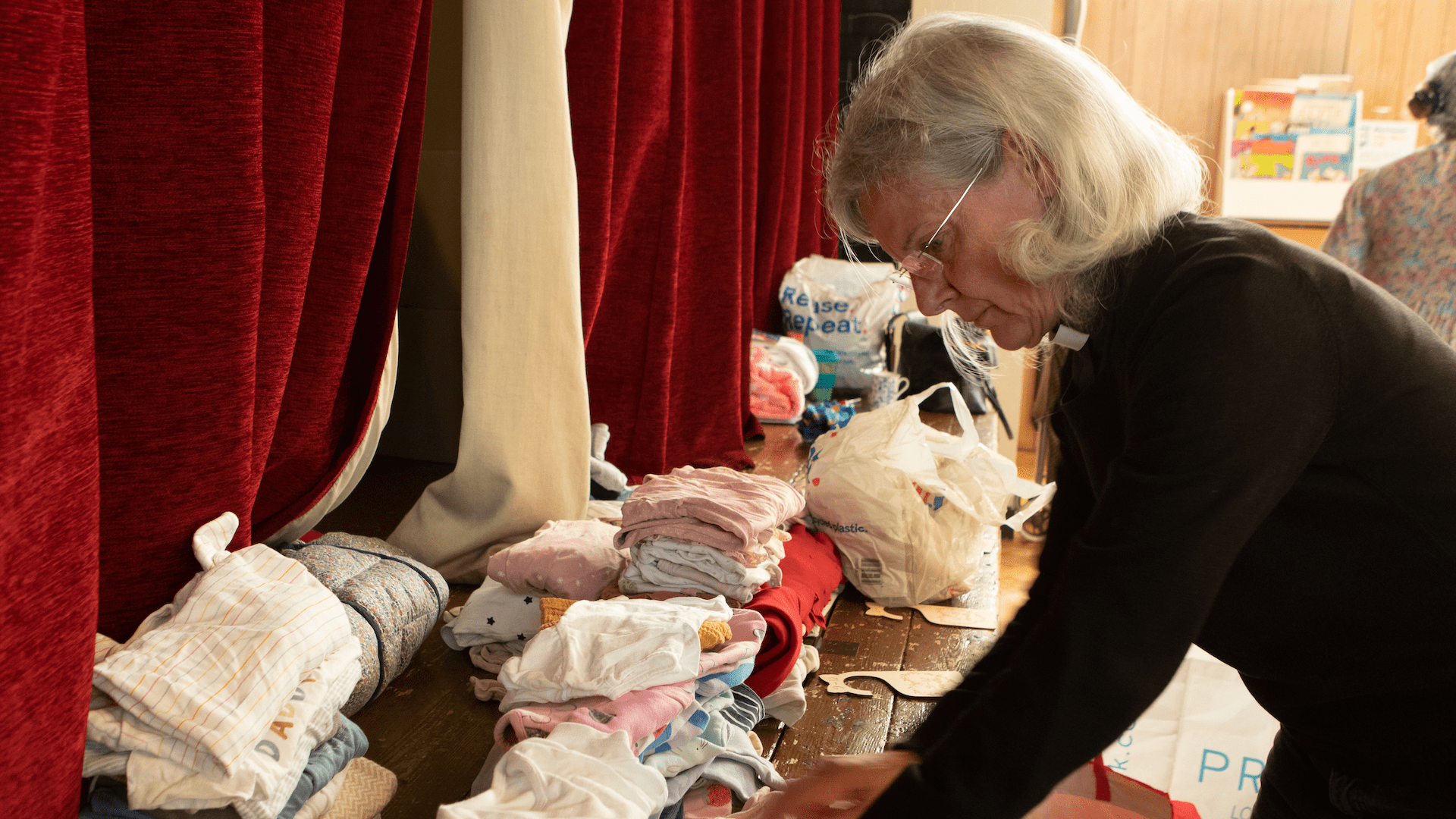
Reverend Caroline Hewitt, who runs Little Lighthouse Baby Bank. Image: Supplied
Share
Emilie de Bruijn holds her laptop up to show a small room, which is Hartlepool’s baby bank in North East England. There is a mural painted on the wall, and toys sprawled over the floor. A small sofa is held together with tape, but it doesn’t matter, she says. That’s where she sits with families to sing songs and read stories.
“I row my boat a thousand times a day,” the senior community lead at the Baby Bank Alliance (BBA) laughs as she speaks about singing nursery rhymes with children. “It takes the pressure off families who are tired, low, and really struggling. We provide that bit of moral support.”
But that is not just what baby banks do. They provide essential items for babies and children to families in need.
There are hundreds of baby banks across the nation. The Baby Bank Alliance was founded by Save the Children, Purposeful Ventures, Little Village and Bristol Baby Bank Network, to support the 400 baby banks in the UK.
Across the UK, child poverty is increasing, and families are relying on baby banks for long-term support and basic necessities as the cost of living continues to rise.
Advertising helps fund Big Issue’s mission to end poverty
Advertising helps fund Big Issue’s mission to end poverty
New data from the BBA has revealed that 400,000 children and babies were supported by their baby banks last year. That is more than a thousand a day and an 11% increase on the previous year.
There has also been a rise in demand for everyday items from baby banks, including a 26% increase in the amount of formula milk distributed – with 24,000 tubs given out last year.
And there were 16,000 cots, cot beds, and travel cots given to families, up by 20% from the previous year.
Keep reading the journalism that powers our mission
Register free to continue and learn more about the stories, campaigns and the support we provide, helping people facing poverty across the UK.
De Bruijn says that when the Hartlepool baby bank first opened in 2019, it supported families who encountered a bump in the road, supplying them with a bundle of clothes while they got back on their feet.
“Now, people need nappies, formula milk, toiletries, a bundle of clothes, and a pair of shoes, and they will be back in less than a month. That bump in the road is a continuous state of need.”
“We are not talking about flash items, but about a safe place for a baby to sleep,” says De Bruijn. In Hartlepool right now, 20 families are waiting for a cot, and 15 are waiting for a safety gate, with one mother who has been waiting for a cot since the end of 2025.
Advertising helps fund Big Issue’s mission to end poverty
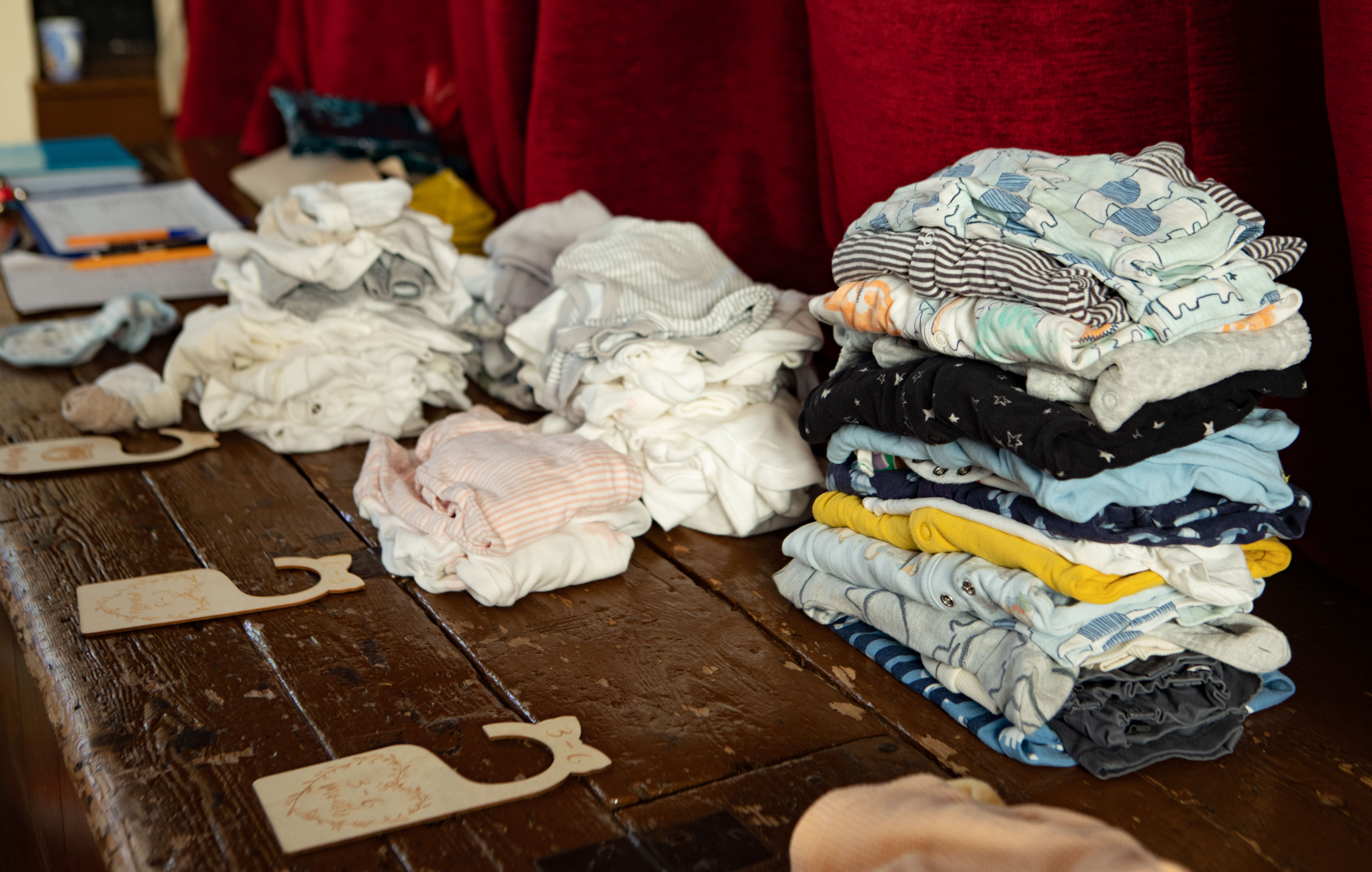
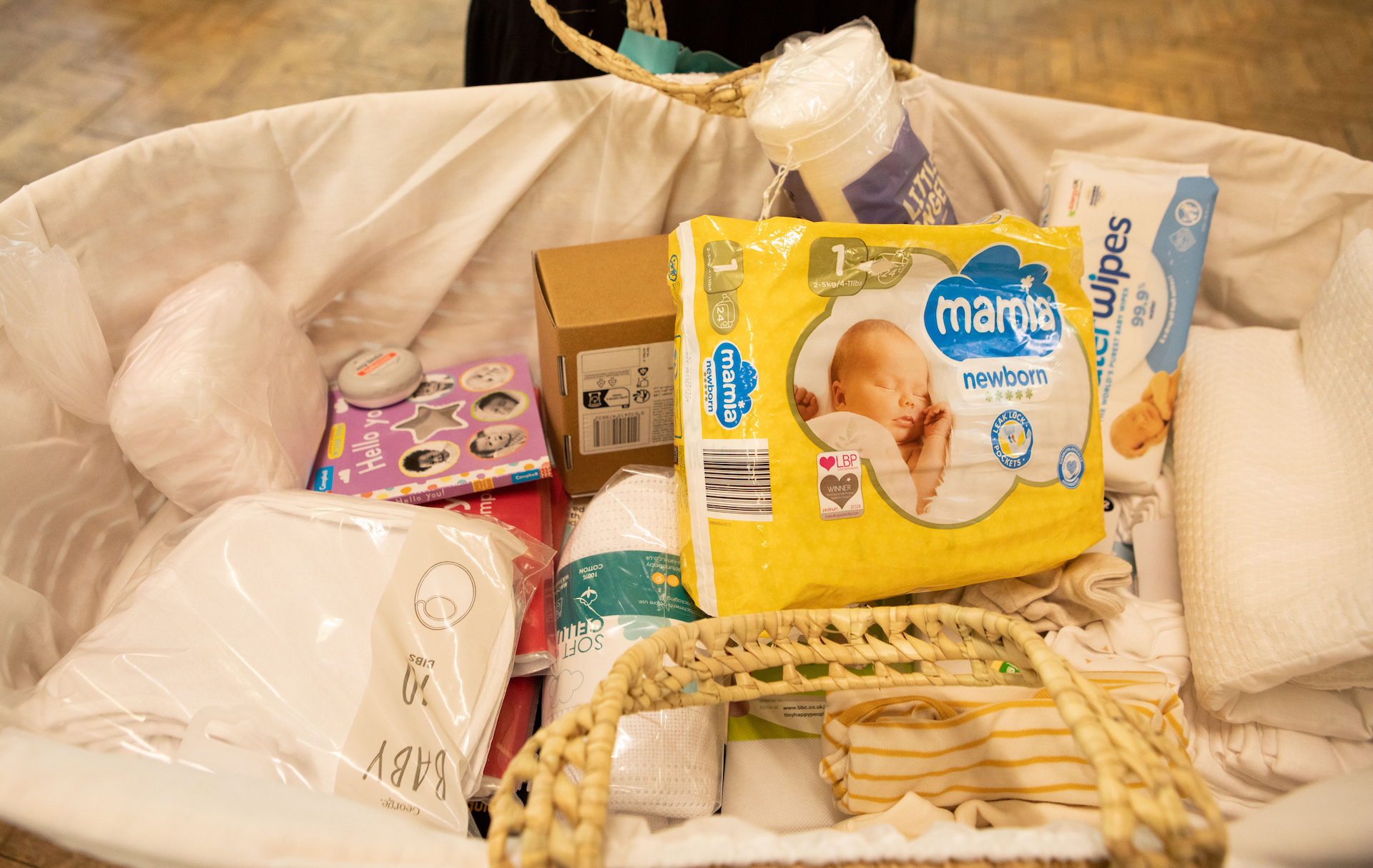
Baby banks provide essential items like clothes and nappies. Image: Supplied
Baby banks rely on mobilising charity donations or corporate sponsorships, and reusing items around the local community. Most operate both a referral and walk-in system, with referrals being made by healthcare professionals and social services.
De Bruijn often supplies to social workers who are housing children in care and rely on the baby banks in emergency callouts.
“A lot of the time, we are doing what should be the statutory services’ job. We do it because somebody needs to, but we’re expected to do it on a shoestring,” she says.
Lizzie, a single mother of five from Wythenshawe in Manchester, fell pregnant with her twins in 2022. She describes finding her local baby bank and Reverend Catherine Hewitt, who runs it, as “finding a path to light”.
“I was absolutely dreading giving birth. I didn’t know how I was going to do a food shop, let alone feed two new babies, buy wipes, mittens, a double pram and two cots.”
While pregnant, Lizzie had to leave her job as a housekeeper in a hotel due to the physical demands, and, at the time, was receiving £34 a week on child benefits, to be split between her other three children. She calculated that nappies alone for her twins would cost around £30 a week, while a double pram costs between £150 and £1600.
Advertising helps fund Big Issue’s mission to end poverty
“I dug myself into a hole, deeper and deeper. I didn’t know what to do or who to talk to,” she says.
Lizzie used the Wythenshawe baby bank for 17 weeks post-partum and says she was supplied with “absolutely everything” she needed by Hewitt. She now works as a volunteer at the bank.
Hewitt adds: “Just as food banks have become normalised in this country, baby banks are becoming normalised too.”
Under Keir Starmer, Labour introduced a historic child poverty strategy, scrapping the two-child limit on benefits, and expanding free school meals to all children in households on universal credit.
“It is going to pull 450,000 children out of poverty, but there are still four million of them left,” says Sophie Livingstone, MBE, chair of Baby Bank Alliance and CEO of Little Village Baby Banks in London.
“When we are talking about the numbers that baby banks are providing for, the two-child benefit scrap is not going to make a difference to our demand,” she says.
Advertising helps fund Big Issue’s mission to end poverty
It is estimated that 19 million items were distributed by the BBA last year. “This is just the tip of the iceberg”, says Livingstone.
As part of Labour’s welfare reforms, the Department of Education launched Best Start Family Hubs, which are local hubs to provide families with a ‘one-stop’ access to a range of statutory services.
From Starmer’s successor, Livingstone hopes for a radical and collaborative approach to tackling infant poverty, such as plugging baby banks into local systems like the ‘Best Start’ hubs.
“It is increasingly impossible to afford a family in this country, and there is not enough of a safety net to catch people who fall into need,” she says.
“We need to acknowledge that it’s hard to bring up a child in Britain today but simultaneously say ‘we want to be an incredibly family-friendly country.’”
Laura, mother of one, fell pregnant at age 35 in 2023. Both she and her partner were self-employed, and her partner did seasonal work, which left him unemployed for half of the year.
Advertising helps fund Big Issue’s mission to end poverty
Baby banks are calling for change so that they do not become as normalised as food banks. Image: Supplied
They received an NHS Healthy Start card from the government, which is a prepaid card given to families with young children on low incomes or who are receiving certain benefits. However, the card only covered two tubs of formula milk per month, and their daughter was drinking two tubs per week. The family relied on Wythenshawe baby bank for formula throughout their daughters’ first year.
Laura says that some weeks in the baby bank, there are people there who look like they have not slept. “You can just tell there is a huge weight on their shoulders.”
“At first, you feel like a failure as a parent, and there is a lot of embarrassment. Once you reach out, you realise that lots of people are in the same situation and it’s nothing you are doing wrong; it’s just the way the world is at the moment – everyone is struggling.”
It is not just unemployed parents or those on child benefits who use the baby banks. Families supported across the country include those in work, those on maternity leave, asylum seekers and those with no recourse to public funds.
In Hartlepool, De Bruijn says most parents she provides for are in low-paid work with unstable hours. Many are care workers who get 30 to 40 hours of work one week and none the next. Others work shifts in the nearby Amazon factories, one of which is 8.3 miles south of the town, and the other is 21.5 miles southeast.
“Public transport in Hartlepool is awful. For many parents, to work and get back for the school run, they are forced to use a big chunk of an hour’s wage on a taxi. It’s very difficult to get around without a car, but a car uses up all your money,” says De Bruijn.
Advertising helps fund Big Issue’s mission to end poverty
North East England has the highest level of regional need in the UK, in terms of referrals and families supported, according to BBA data. In 2025, 1,121 families and 1,663 families in the region were provided for by baby banks. However, baby banks all over the country report that parents are increasingly desperate for support.
Hewitt says: “It is damning that in the twenty-first century, in one of the richest countries in the world, we have this many families who can’t afford to feed their children.”
Buy from your local Big Issue vendor every week – and always take the magazine. It’s how vendors earn with dignity and move forward.
You can also support online: Subscribe to the magazine or support our work with a monthly gift. Your support helps vendors earn, learn and thrive while strengthening our frontline services.Thank you for standing with Big Issue vendors.
Advertising helps fund Big Issue’s mission to end poverty
Advertising helps fund Big Issue’s mission to end poverty