Advertising helps fund Big Issue’s mission to end poverty
Social Justice

Home Office policy has led to a surge in refugee homelessness, academics say

In November, The Big Issue revealed the rush to clear the asylum backlog had tripled homelessness among newly-evicted refugees

Cardiff, homeless

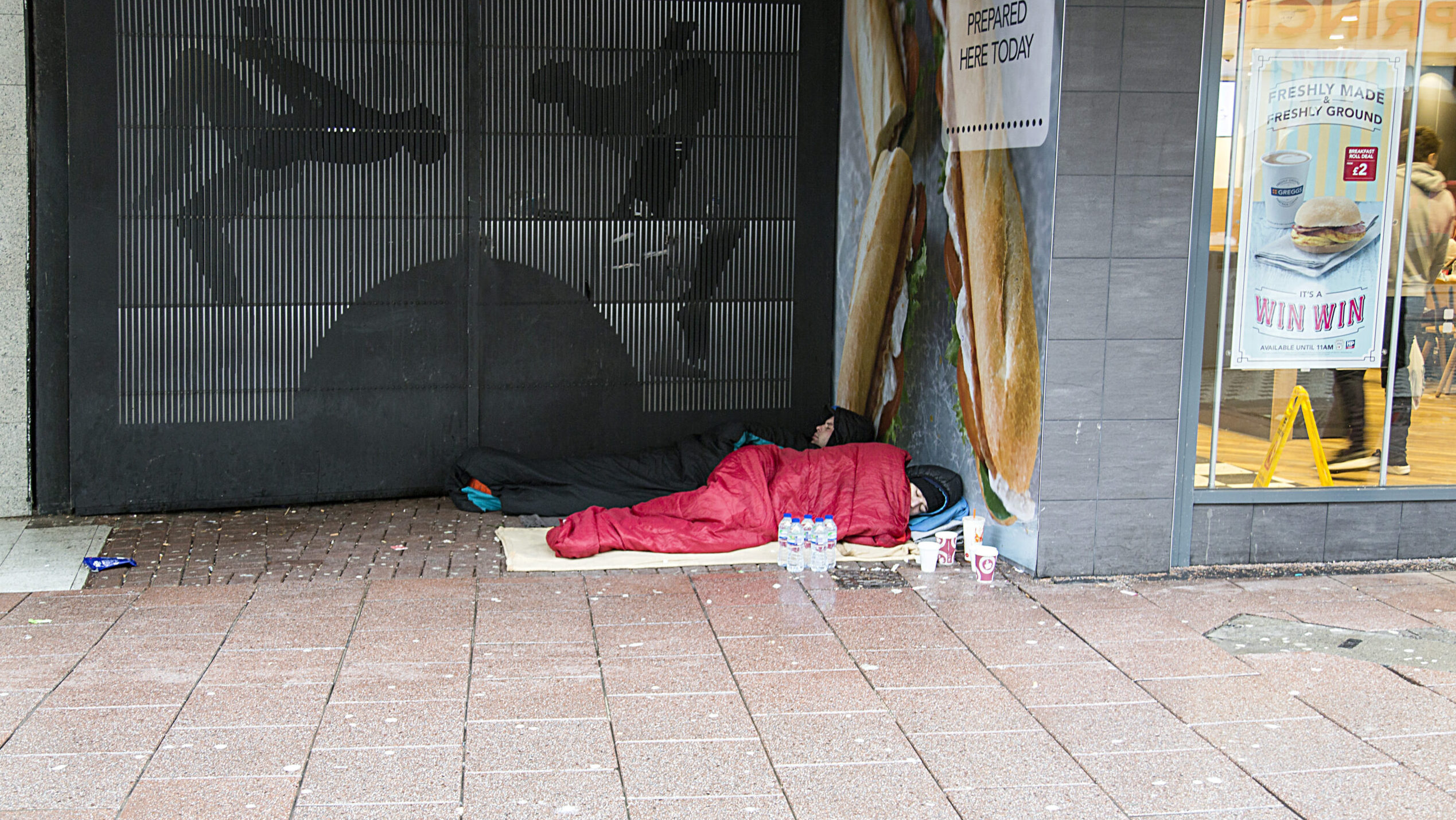
Cardiff has seen the average number of homeless refugees rocket since August. Image: jax10289/Shutterstock

A new report from the Centre for Homelessness Impact has revealed there was a 223% surge people leaving asylum being made street homeless between June and September 2023.

It confirms what The Big Issue has been saying for months: that changes to Home Office policy have seen refugee homelessness skyrocket.

Written by academics at the University of Huddersfield, the report tallies with an in-depth Big Issue investigation launched in November. We found that a reduction in the time given to refugees to “move on” from asylum accommodation after their claim had been processed had resulted in homelessness tripling among those evicted.

University of Huddersfield professor Philip Brown, lead researcher on the project, said: “Those people who arrive in the UK to seek sanctuary have, over the last few decades, been increasingly finding themselves accommodated in precarious situations, often enduring homelessness.

“This is particularly common for those receiving refugee status after a decision on their claim for asylum. These are challenges shared by many people in the UK.

“A lack of social housing, low-pay work and a poorly resourced support system maintain common struggles. The lack of familiarity with UK systems, difficulty getting into employment and an often fledging grasp of English means that, for refugees, they find things even harder.


Advertising helps fund Big Issue’s mission to end poverty

“We hope that our analysis helps to see where things can be done to help refugees live their lives in peace. Many of these things will help everyone who is struggling to have somewhere safe to call home.”  

The Centre for Homelessness Impact report found that these short “move-on” periods after asylum application decisions, welfare reforms, the right-to-rent policy, and family reunifications are significantly contributing to housing instability for refugees.

It also exposed issues with country-specific schemes: Afghan refugees are subject to prolonged stays in temporary ‘bridging accommodation’, while those in the Homes for Ukraine schemes face a higher risk of homelessness after leaving their host families.

Keep reading the journalism that powers our mission

Register free to continue and learn more about the stories, campaigns and the support we provide, helping people facing poverty across the UK.

Behind the statistics are countless human stories – people granted protection by the UK, only to immediately find themselves in the jaws of a new crisis. One refugee made homeless, Adam, told The Big Issue in an interview last November: “Mentally and physically I am really tired.

“I’m asking myself, why am I here? Would it have been better to stay in Yemen and die there? And save trouble for myself and others? I don’t know.”

The effective reduction to the move-on period was put in place on 1 August, making asylum seekers street homeless with often just one week’s notice. However, in a change revealed by The Big Issue, it was seemingly reversed in September – without councils or refugee organisations being told.

Ligia Teixeira, chief executive of the Centre for Homelessness Impact, said: “To truly address this crisis, we must adopt a strategic approach to national and local refugee settlement.

“This research allows us to better understand the lives of refugees in the UK and highlights the deep personal struggles that people are facing.“

Advertising helps fund Big Issue’s mission to end poverty

Do you know how Big Issue 'really' works?

Watch this simple explanation.

Recommended for you

View all
The government wants you to buy tinned food to prepare for a crisis. What if you can't afford it?
images of fruit and vegetables on cans to showcase food poverty
Food

The government wants you to buy tinned food to prepare for a crisis. What if you can't afford it?

DWP rule change means people in temporary accommodation no longer lose money for working
a person working at a desk
Social Justice

DWP rule change means people in temporary accommodation no longer lose money for working

Baby banks are the hidden emergency service Labour cannot afford to ignore
mother and baby at a baby bank
Hannah Pentith

Baby banks are the hidden emergency service Labour cannot afford to ignore

'A child's life can be made easier by money arriving when it should'
a child at a food shop
Baroness Maeve Sherlock

'A child's life can be made easier by money arriving when it should'