Advertising helps fund Big Issue’s mission to end poverty
Theatre

Our Public House: How penis drawings on election night shaped play about UK democracy

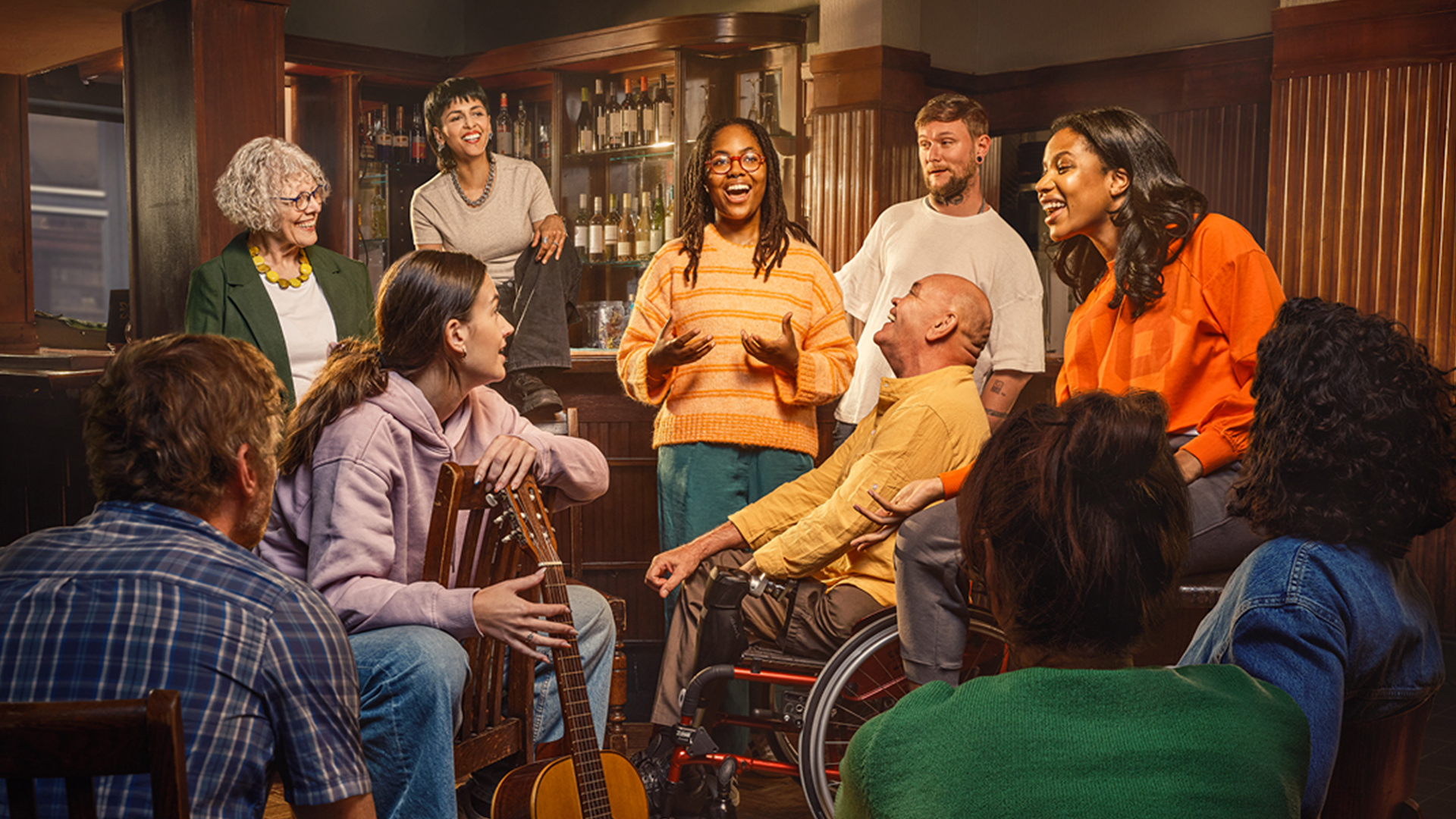
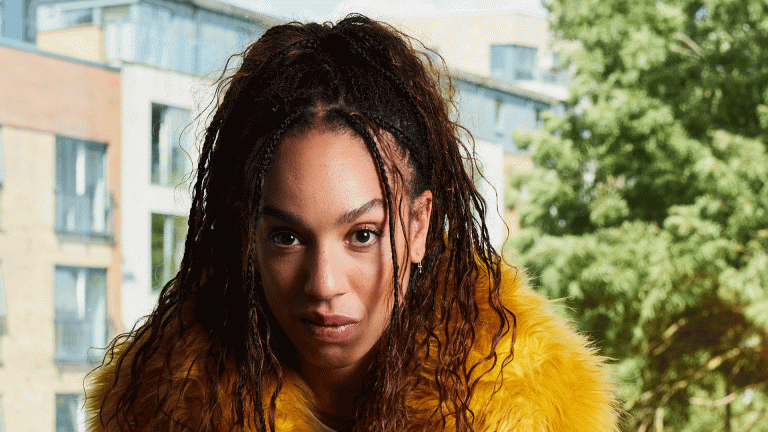
Our Public House is the story of a by-election being held after a vote strike, where people had rejected all the options available to them

The cast of Our Public House

Two years ago I stood for election as the Green Party parliamentary candidate in my home town of Salisbury. I was living there after a spell of itinerance during which I was reliant on the kindness of friends to find places to stay; when I got the money together to get myself a home again, I thought of going back to where I’d grown up.

When the election was announced, I jumped at the chance to put myself forward. I thought it would be a great opportunity to reconnect with where I’m from.

What followed was a whirlwind of leafleting, hustings, doorstep conversations, media appearances, planning Zooms and a final all-nighter at the count. I learned a great deal – for example, that according to my leafleting sample, 4% of homes in Salisbury might be standing empty. I was bitten by dogs three times and shouted at twice.

Get the latest news and insight into how the Big Issue magazine is made by signing up for the Inside Big Issue newsletter

But what stayed with me most clearly was the strange disconnect between words and reality I could hear in the Conservative and Labour candidates I ran against. We’d make our arguments for the country and they’d pitch visions that didn’t add up – greater investment with no tax rises. We got to know each other pretty well as time went by, so I asked them one day how they squared that circle. They looked at me and didn’t say anything. Maybe because their lines were written by someone else.

The obvious came to pass when Labour got in: further tax rises and a continued stagnation in public services (relative to what was promised to us), because I wasn’t wrong – the sums hadn’t added up. I thought back to the people I’d met when campaigning who’d told me they were voting for me or Reform.

Advertising helps fund Big Issue’s mission to end poverty

There had of course been voters who supported the policies of those parties, but it had sometimes seemed a way of rejecting the mainstream. I thought that might have had a lot to do with this issue, the making of promises that didn’t add up. Because people aren’t stupid.

Read more:

I thought, as well, of the strangest part of election night, when every candidate has to gather together and review all the spoiled ballots one by one to agree that none of them should be counted. The experienced campaigners among us were amazed at how many spoiled ballots there were that night – more than double the number of previous elections.

Most were clearly not spoiled by accident – a lot of people had drawn penises on their voting slips. It turned out to be a coordinated campaign by an anarchist working in a bar in town, but it still seemed to me to be symptomatic of that attitude of rejection I’d encountered on the doorstep.

All of this shaped Our Public House, the play I’d already started developing at that time about a community where no one votes. Dash Arts, who commissioned the play, had been touring the country for some time working with communities to write speeches about things people wanted to change.

At the heart of their project was a feeling that mainstream politics struggles to represent us – people feel disenfranchised because their concerns aren’t represented in the manifestos of political parties. By leading hundreds of speech-making workshops, Dash wanted to disseminate tools to help get people heard – a wave of arguments all around the country. 

Advertising helps fund Big Issue’s mission to end poverty

That felt to me like an extended argument for allowing town hall meetings to play a larger role in politics, and for devolution that would let specific concerns be addressed more directly than national politics can. To accompany this, what I created was a play about the people who don’t feel heard – a play about the disconnect I saw between the words of politicians and the world as it is.

I wanted to write a group of funny, brilliant, intelligent, controversial, goofy, challenged, struggling people, trying to live better lives and to be heard. I wrote the story of a by-election being held after a vote strike, where people had rejected all the options available to them, like the anarchist who worked at Sips in Salisbury.

Because, while it’s undoubtedly nihilistic to spoil your vote and opt out of the democratic process, it struck me back in 2024 as a more coherent argument than the ones being made by politicians.

Our Public House tours the UK until 4 July

Do you have a story to tell or opinions to share about this? Get in touch and tell us more

Change a vendor’s life.

Advertising helps fund Big Issue’s mission to end poverty

Buy from your local Big Issue vendor every week – and always take the magazine. It’s how vendors earn with dignity and move forward.

You can also support online:
Subscribe to the magazine or support our work with a monthly gift. Your support helps vendors earn, learn and thrive while strengthening our frontline services.

Thank you for standing with Big Issue vendors.

Advertising helps fund Big Issue’s mission to end poverty

Do you know how Big Issue 'really' works?

Watch this simple explanation.

Recommended for you

View all
Alan Cumming: 'The High Life was always about Scotland’s place and the notion of independence'
Comedy

Alan Cumming: 'The High Life was always about Scotland’s place and the notion of independence'

The Boy Who Harnessed the Wind William Kamkwamba: ‘Hunger changes people’
Interview

The Boy Who Harnessed the Wind William Kamkwamba: ‘Hunger changes people’

OffWestEnd's Denholm Spurr: 'I slept in saunas while homeless. Now I champion independent theatre'
Denholm Spurr
Theatre

OffWestEnd's Denholm Spurr: 'I slept in saunas while homeless. Now I champion independent theatre'

Paul Ready: ‘After Motherland I wondered if people would be able to see me doing serious drama’
Theatre

Paul Ready: ‘After Motherland I wondered if people would be able to see me doing serious drama’